The six documents a B2B buyer asks for

A spec sheet, a sell sheet, a line card, a capability statement, a proposal and a case study. Each one is defined below: what it is, who reads it, when a buyer asks for it, and the mistake that costs you the deal. Templates behind each definition, free, no signup.

Which document answers which question

These get filed together constantly, and sent in place of each other almost as often. Start from the question the buyer actually asked.

What the buyer is askingSend thisLength
Who are you and can I buy from you?Capability statementOne page, always
Will this product fit my application?Spec sheetOne page, two if the table demands it
Why should I stock or carry this one?Sell sheetOne page
Which brands can you supply?Line cardOne page, kept current
What exactly will you do, and for how much?Service proposalTwo to five pages
Have you done this before?Case studyOne page or one document post

Each document, defined

Written so a definition survives being read on its own, with no page around it.

Capability statement

Also called: Capabilities statement, capabilities deck, capability brief

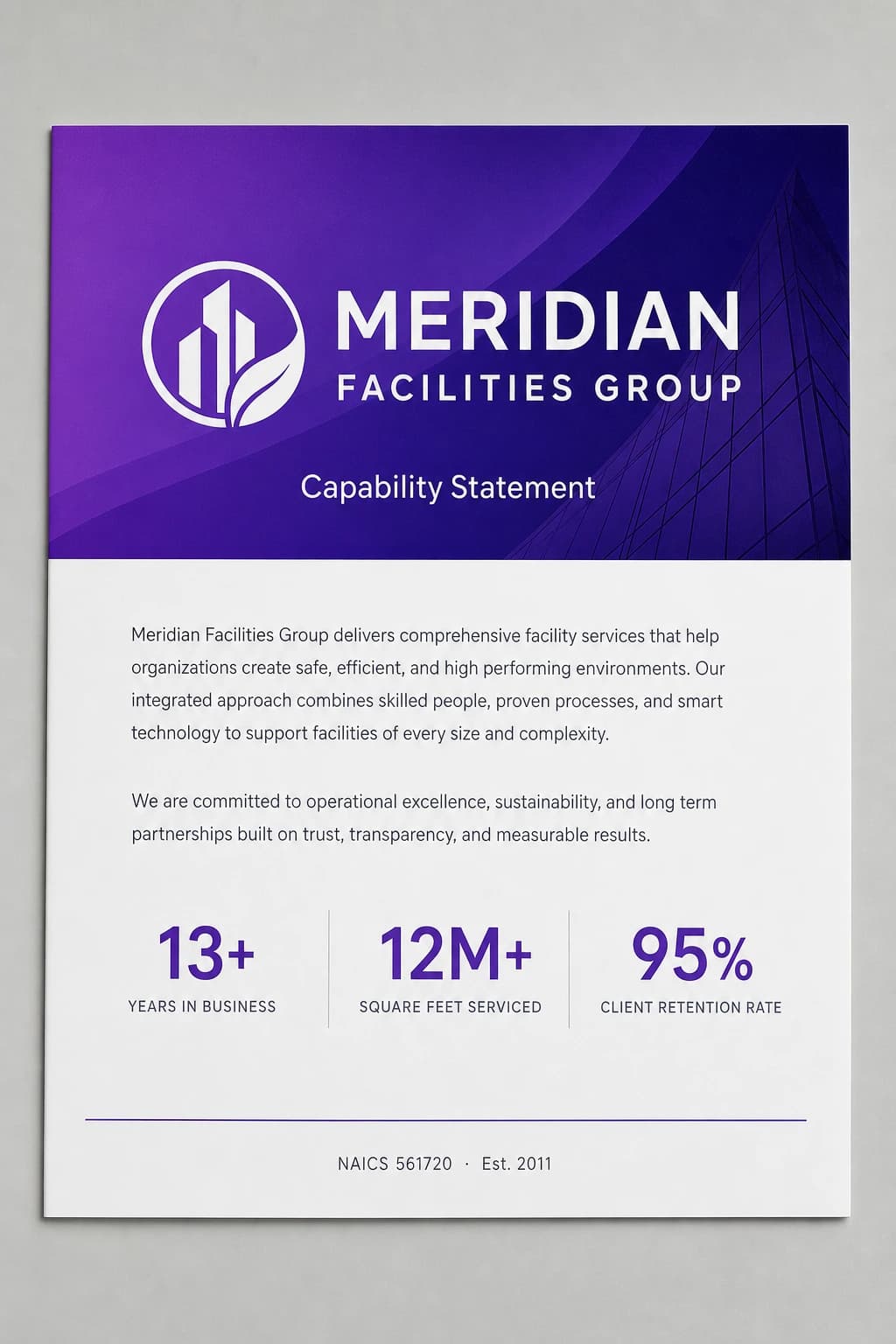
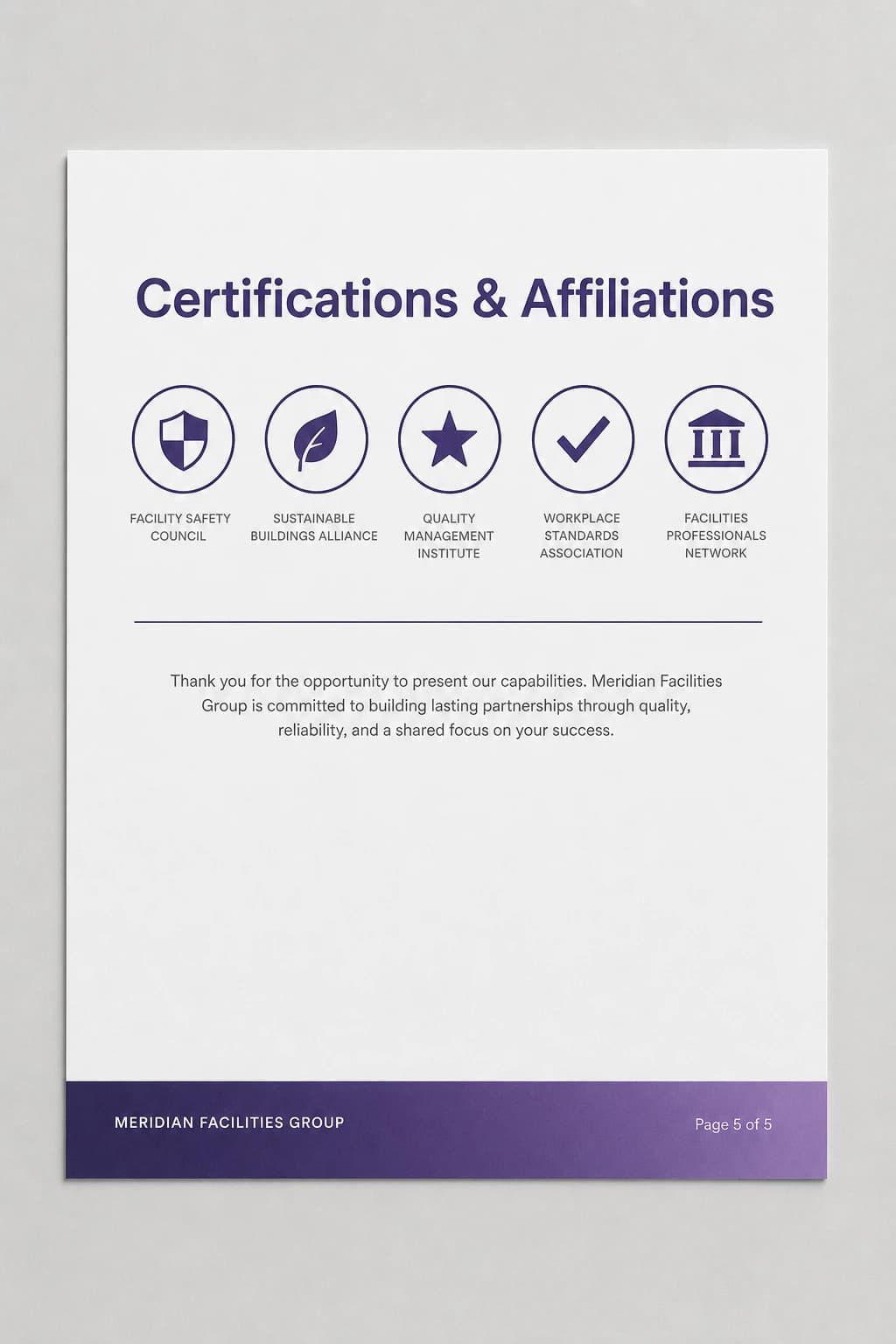
A one page document telling a government or enterprise buyer what your company does, what it has already delivered, why you rather than the next qualified bidder, and the identifiers they need to look you up and buy from you. It is a sales document with a procurement convention: nothing is filed anywhere and there is no single mandated layout.

Who reads it
Contracting officers and small business specialists in United States government contracting, primes screening subcontractors, and large private buyers running vendor onboarding.
When they ask
Asked for by name before a meeting, attached to a registration, or requested the moment a prime is assembling a team. It is read on a screen in a stack with other vendors, which is why the second page is reliably not opened.

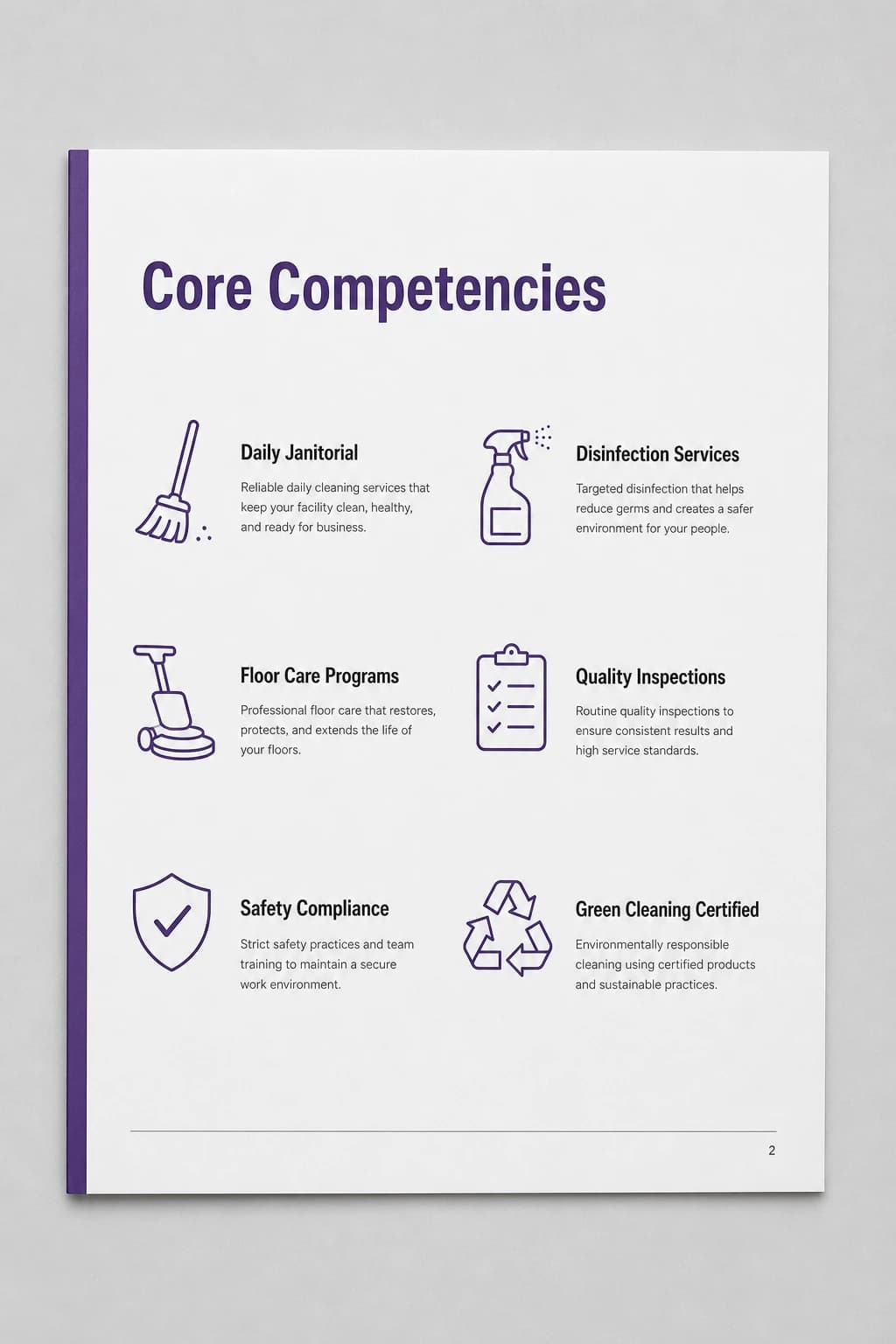
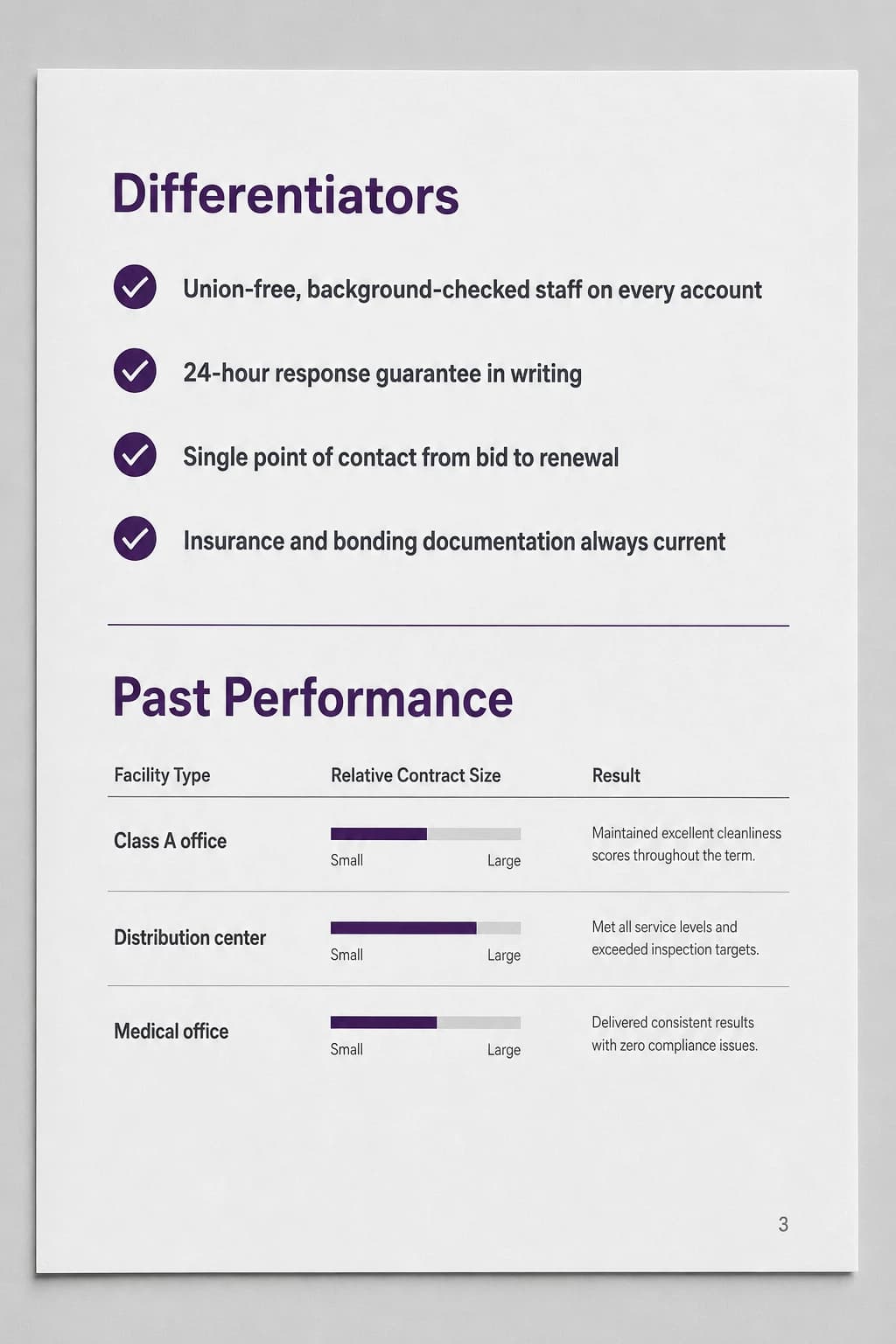
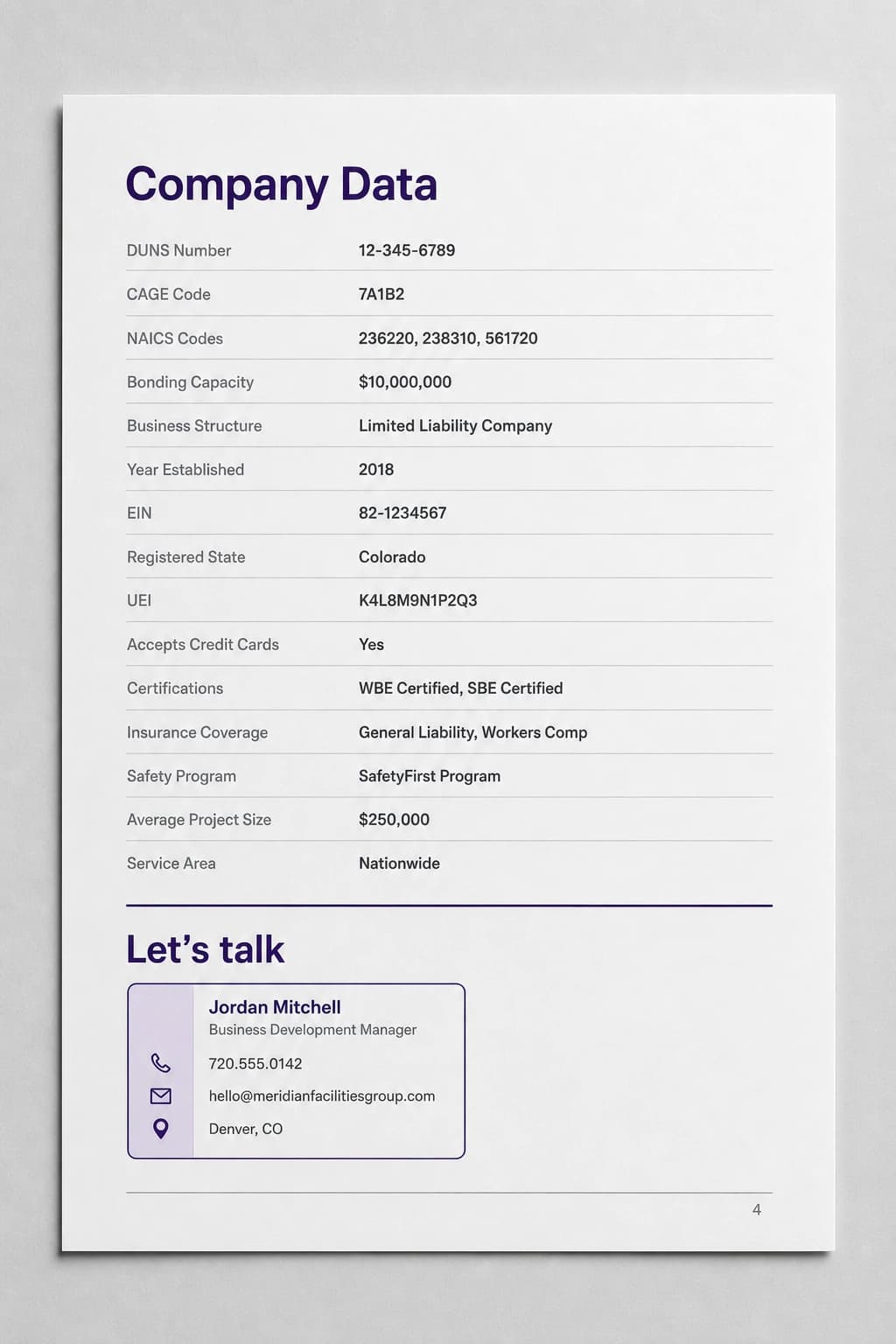
What gets it binned. Explaining the differentiators instead of stating them, which turns the overview into a paragraph and pushes the document onto a second page nobody reads. Six blocks fit on one page: overview, core competencies, past performance, differentiators, the company data block with your identifiers and codes, and one named person with a direct line.

Spec sheet

Also called: Specification sheet, data sheet, product data sheet, technical data sheet, cut sheet

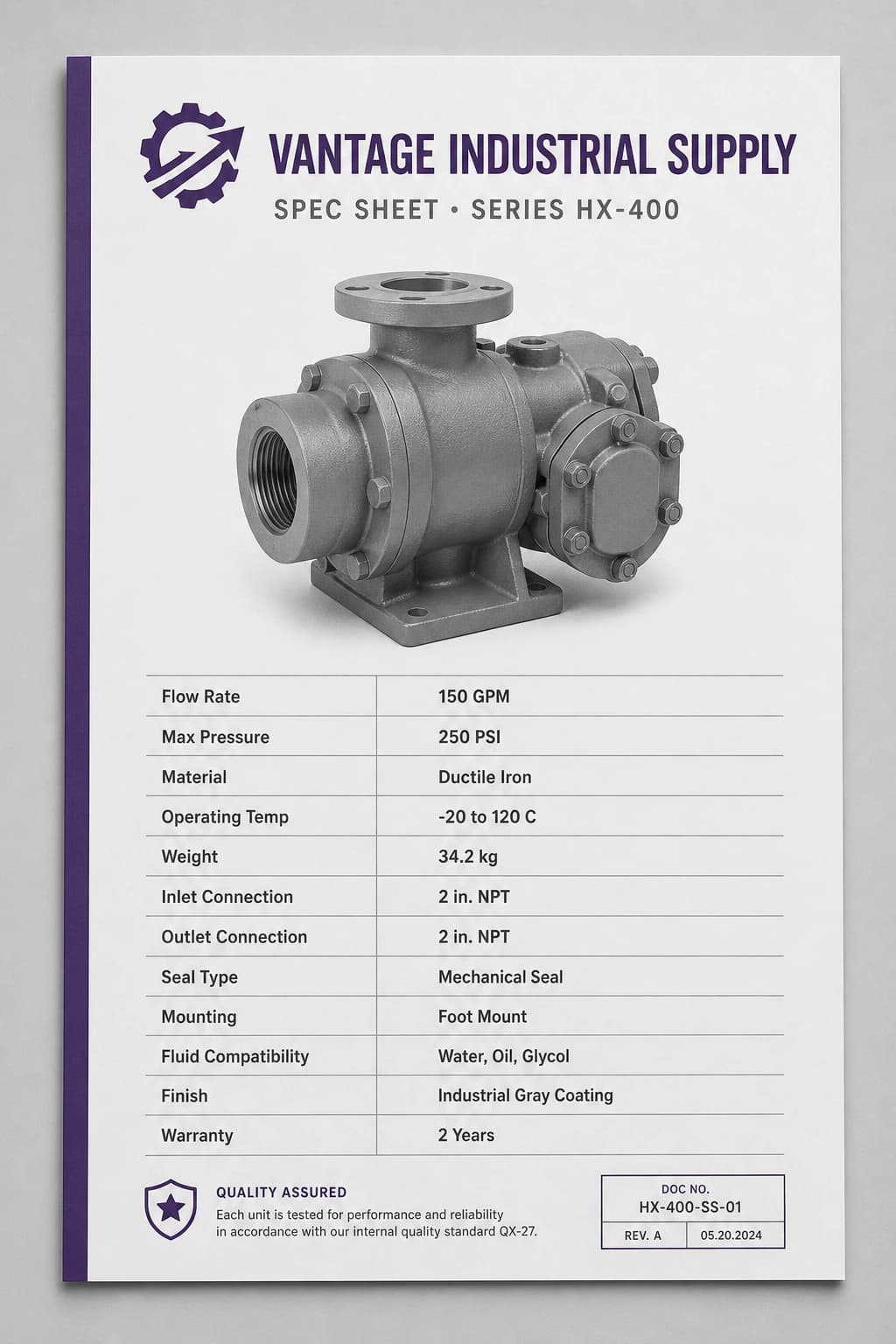
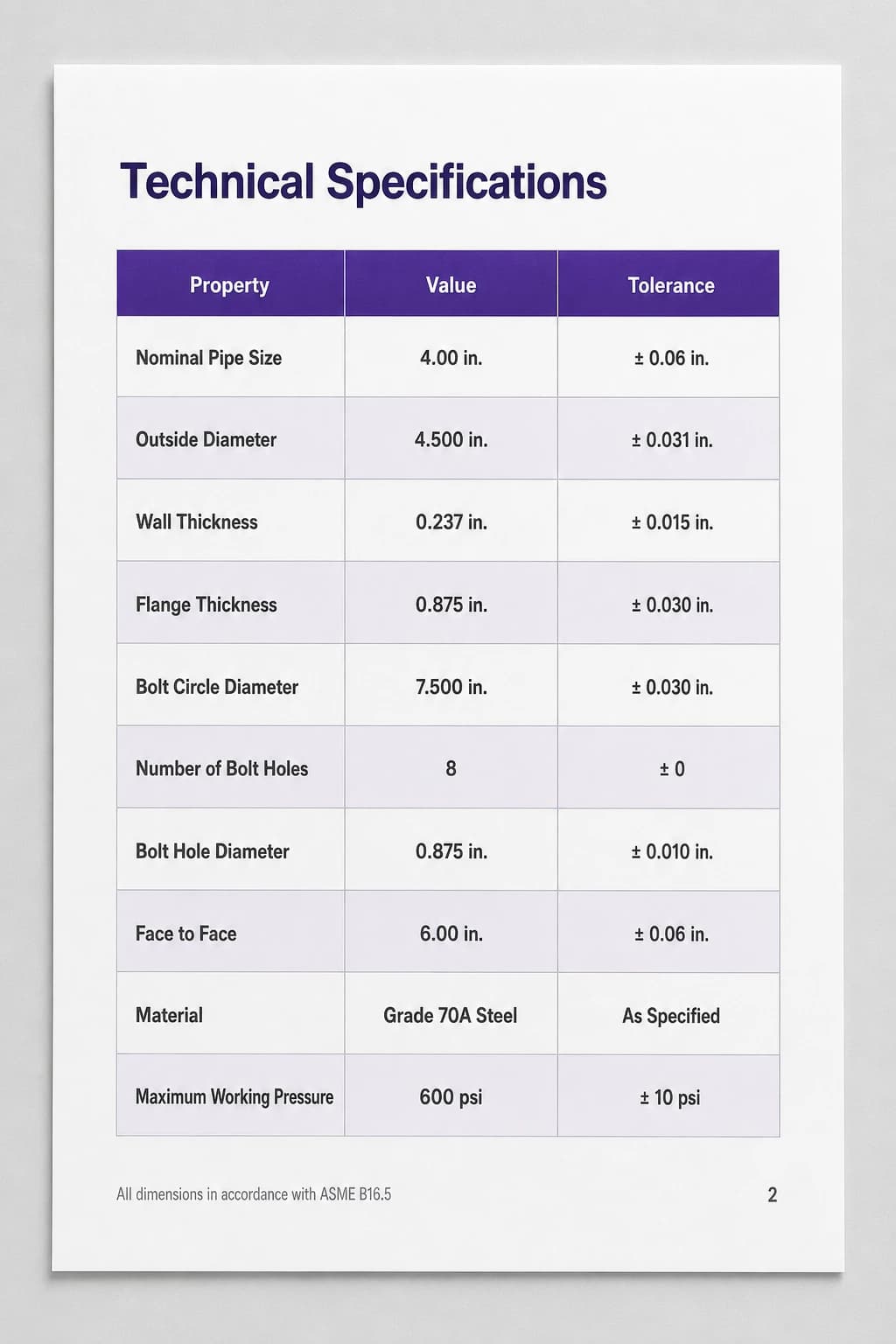
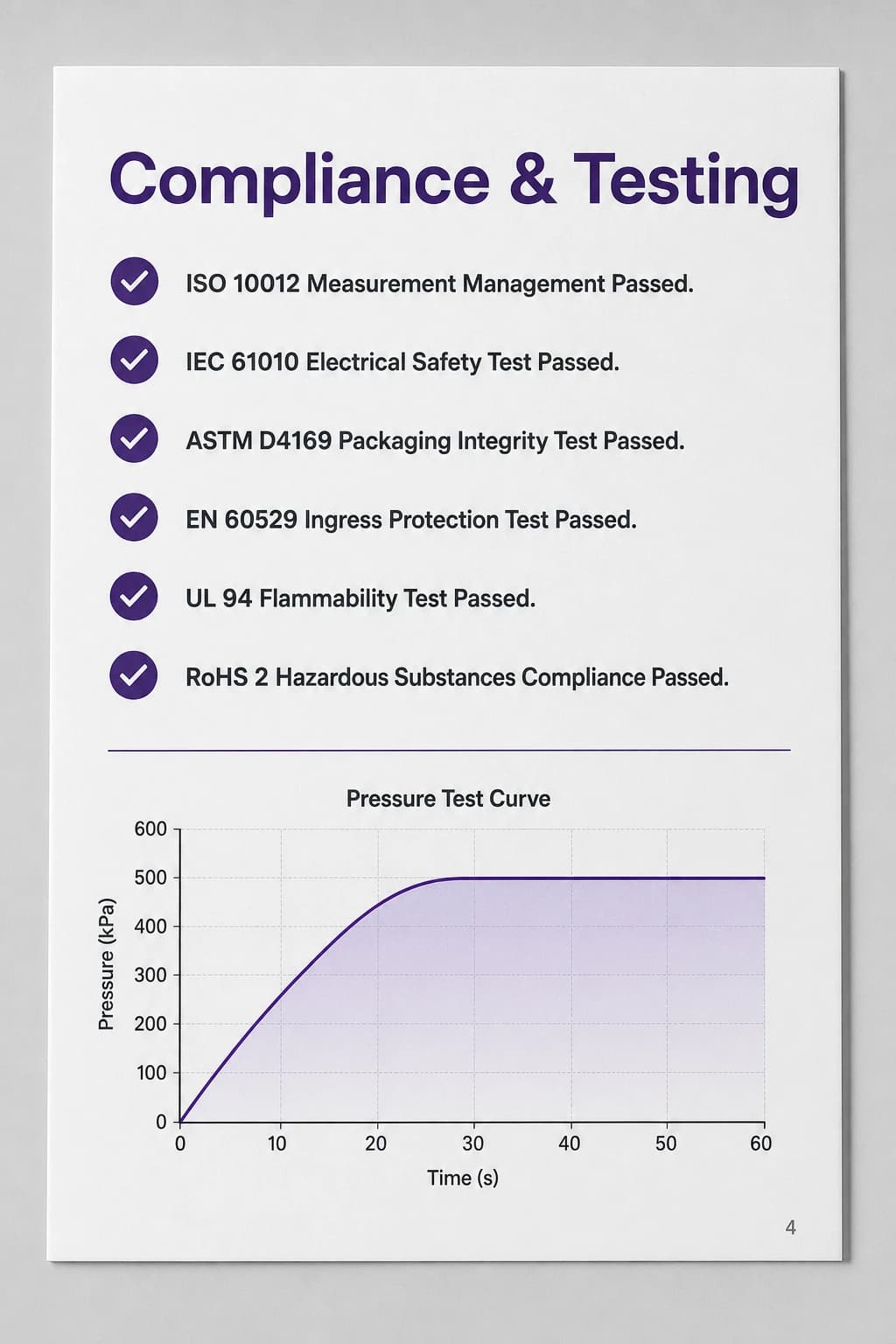
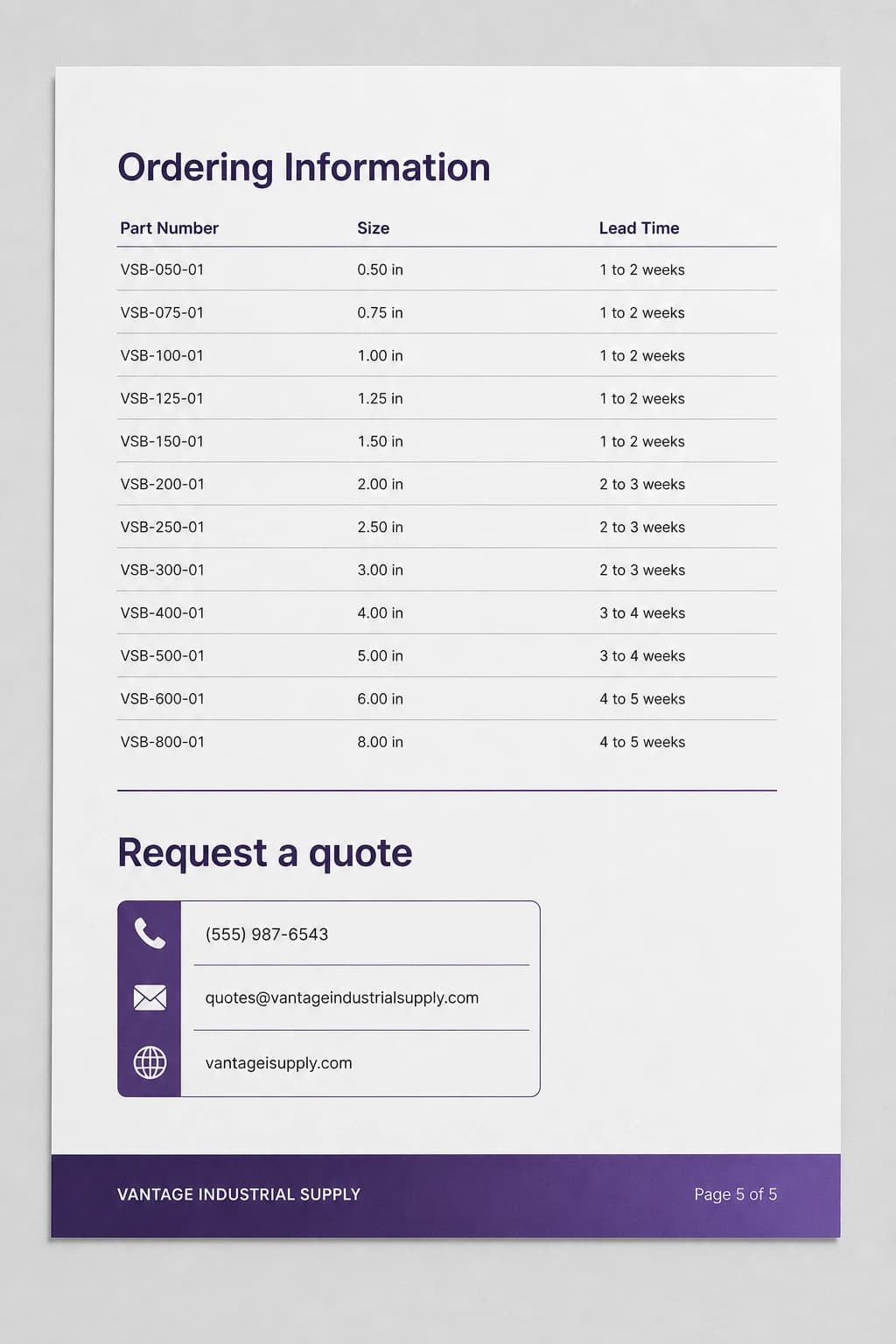
A one page document stating the measured facts about one product: what it is, its dimensions and materials, the performance figures buyers compare on, the standards and certifications it meets, and the part numbers used to order it. It carries no persuasion, and it carries a revision number and a date so a reader knows which version they are holding.

Who reads it
An engineer, a specifier or a buyer checking whether the product fits an application, without having to call you.
When they ask
During specification and during comparison, which is usually before you know the deal exists. In construction, lighting and plumbing the same document is called a cut sheet and goes into a submittal package.

What gets it binned. Shipping it with no revision number and no issue date, which is the field most often missing and the one that decides whether the copy in a buyer's downloads folder is still true. A safety data sheet is a different, regulated document and is never a substitute.

Sell sheet

Also called: Sales sheet, one pager, product sheet

A one page argument for stocking or buying one product. Where a spec sheet states facts, a sell sheet makes a case: the reason this one rather than the alternative, the margin or the outcome, and the proof. It should link to the spec sheet rather than trying to contain it.

Who reads it
A distributor, a retail buyer or a rep deciding what to carry and what to lead with.
When they ask
At a buying appointment, in a line review, or in the rep's bag on the day they choose which of several competing lines to open with.

What gets it binned. Letting one document try to be both. They carry different content, different tone and usually different sign off: engineering owns the spec sheet because a wrong value is a returned order, sales owns the sell sheet because it is a claim. Most products need both.

Line card

Also called: Brand list, lines represented, supplier list

A distributor listing the manufacturers it represents, so a customer can see at a glance which brands it can supply. It is a distributor's document about its suppliers, not a manufacturer's document about a product.

Who reads it
Buyers, contractors and end users working out whether one phone call can cover a whole order, and manufacturers checking who else you carry before they appoint you.
When they ask
Constantly, and it is the single most requested thing a distributor owns. It usually exists as a stale PDF somebody made once, which is the whole problem: the lines change and the document does not.

What gets it binned. Filing it with the line sheet, which is a different document by a different author for a different reader. A line sheet is a brand showing a buyer what it sells and at what price. A line card is a distributor listing the manufacturers it represents. A spec sheet is the measured facts about one product. Three documents, three jobs.

Service proposal

Also called: Bid, scope of work, statement of work, quote with scope

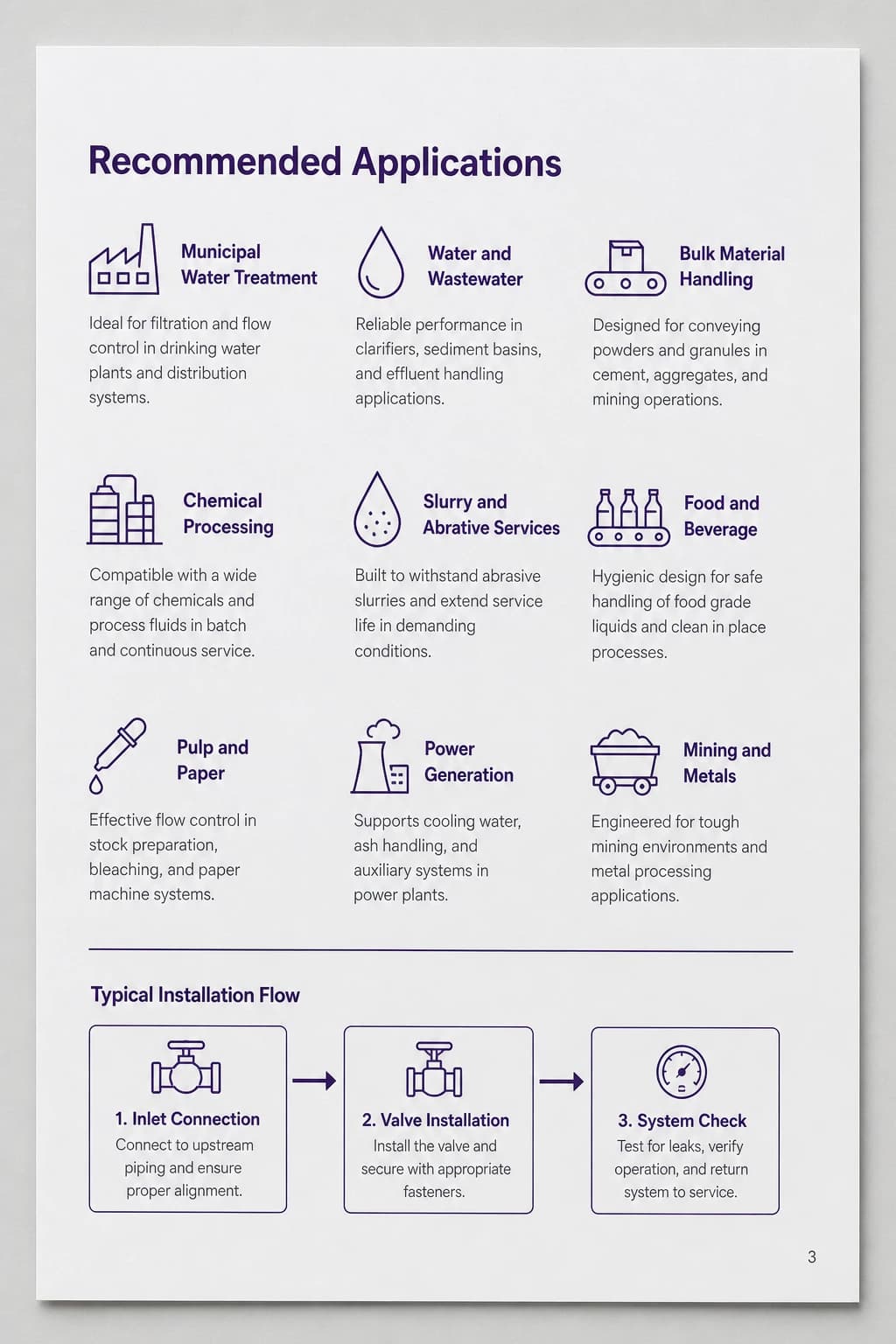
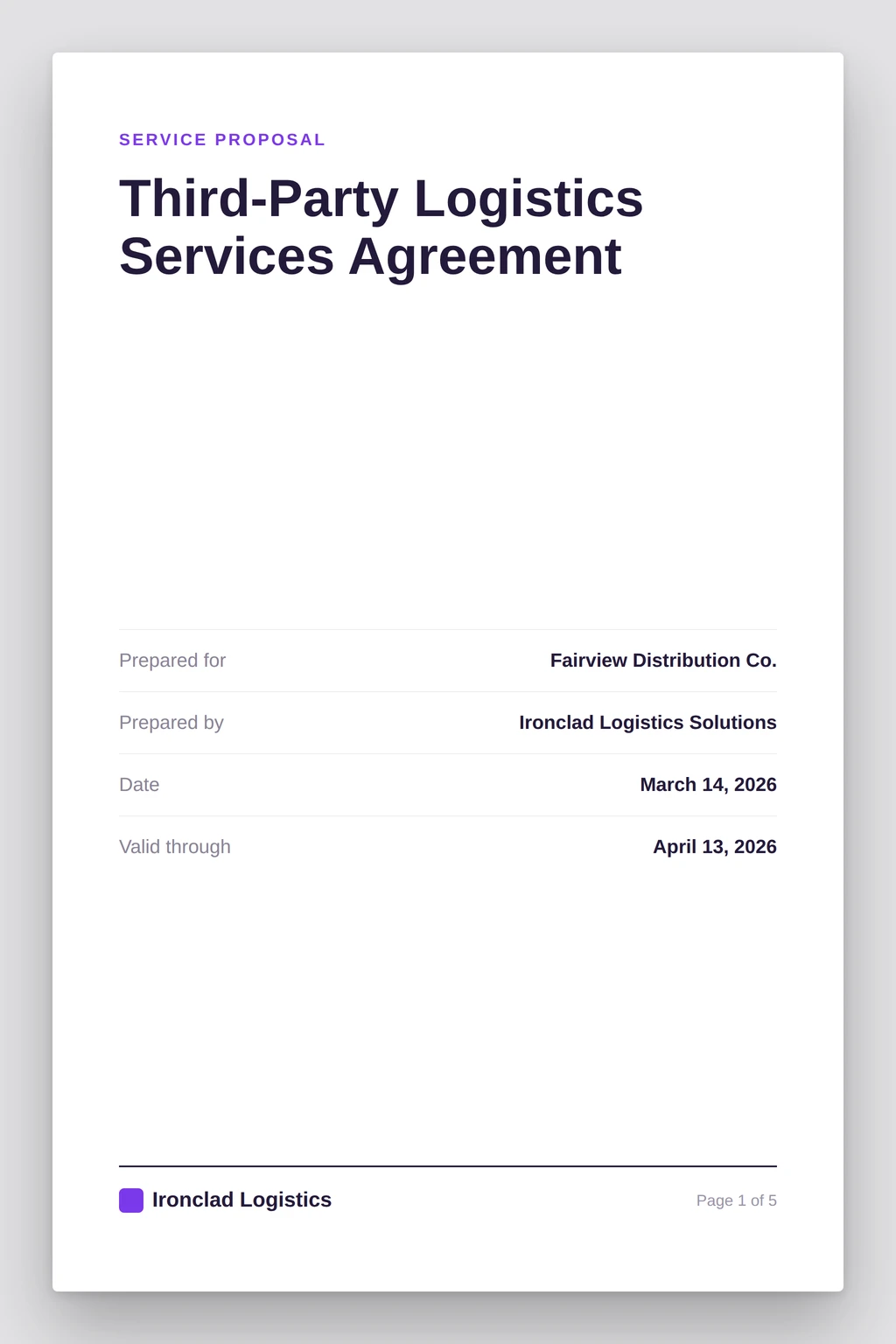
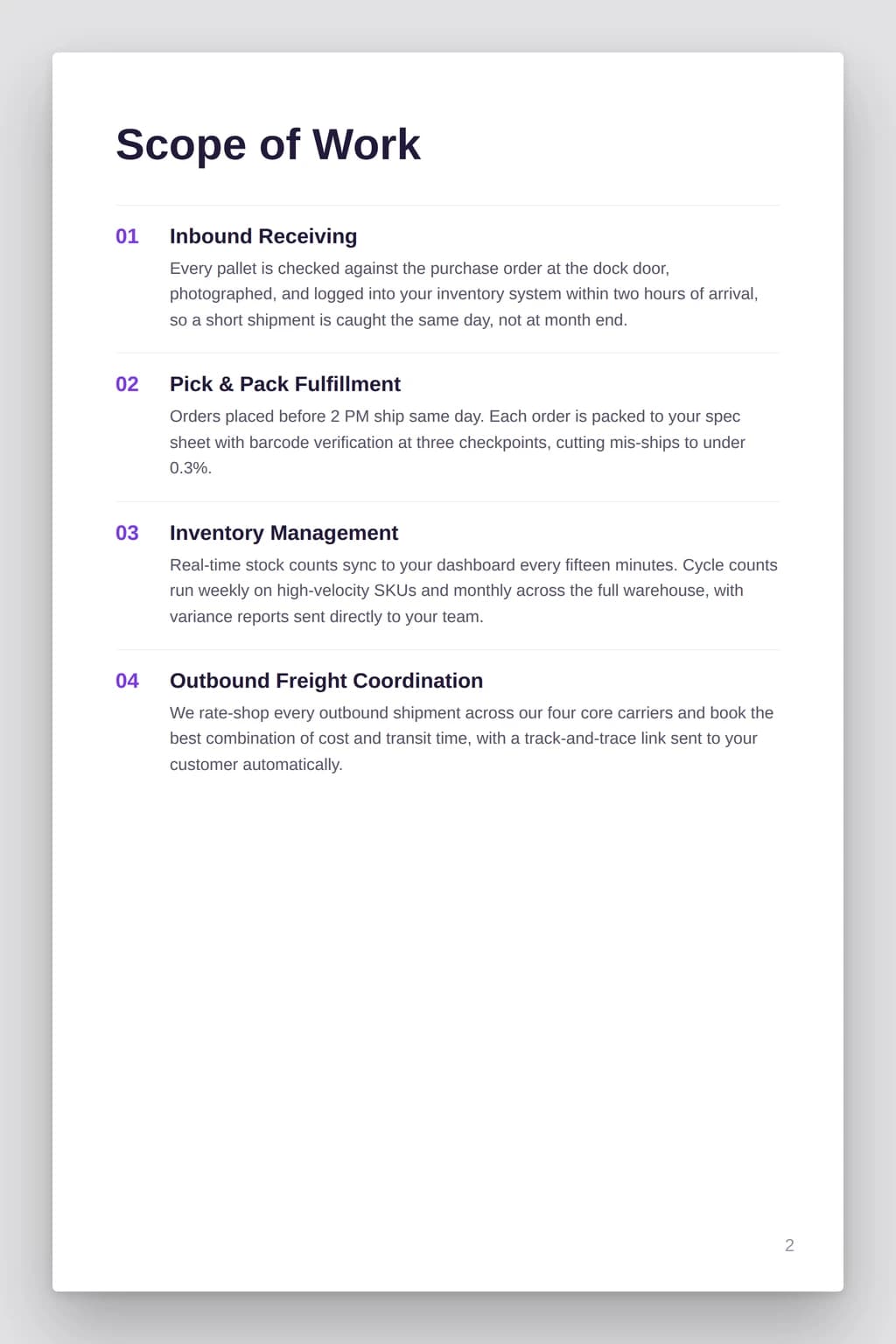
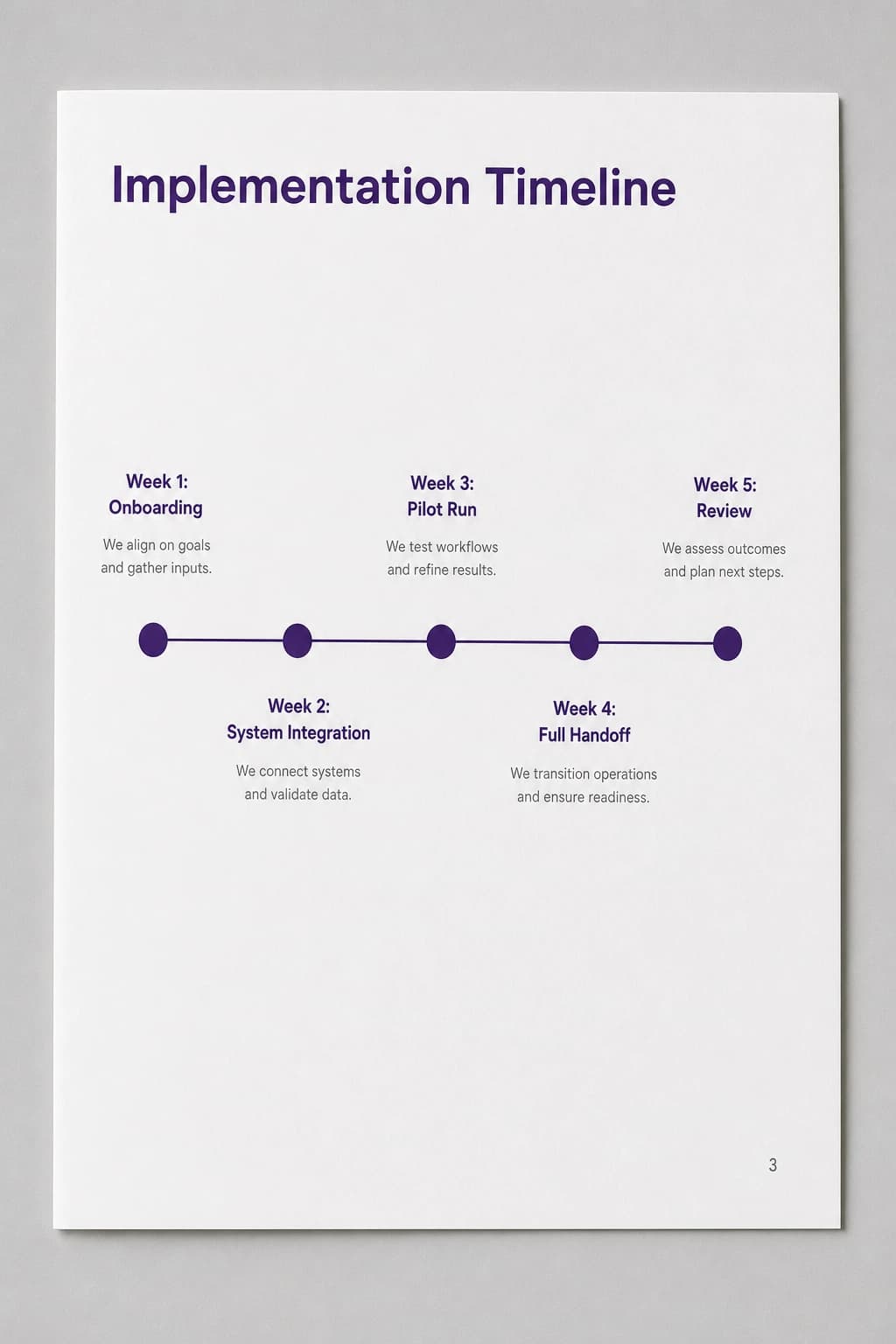
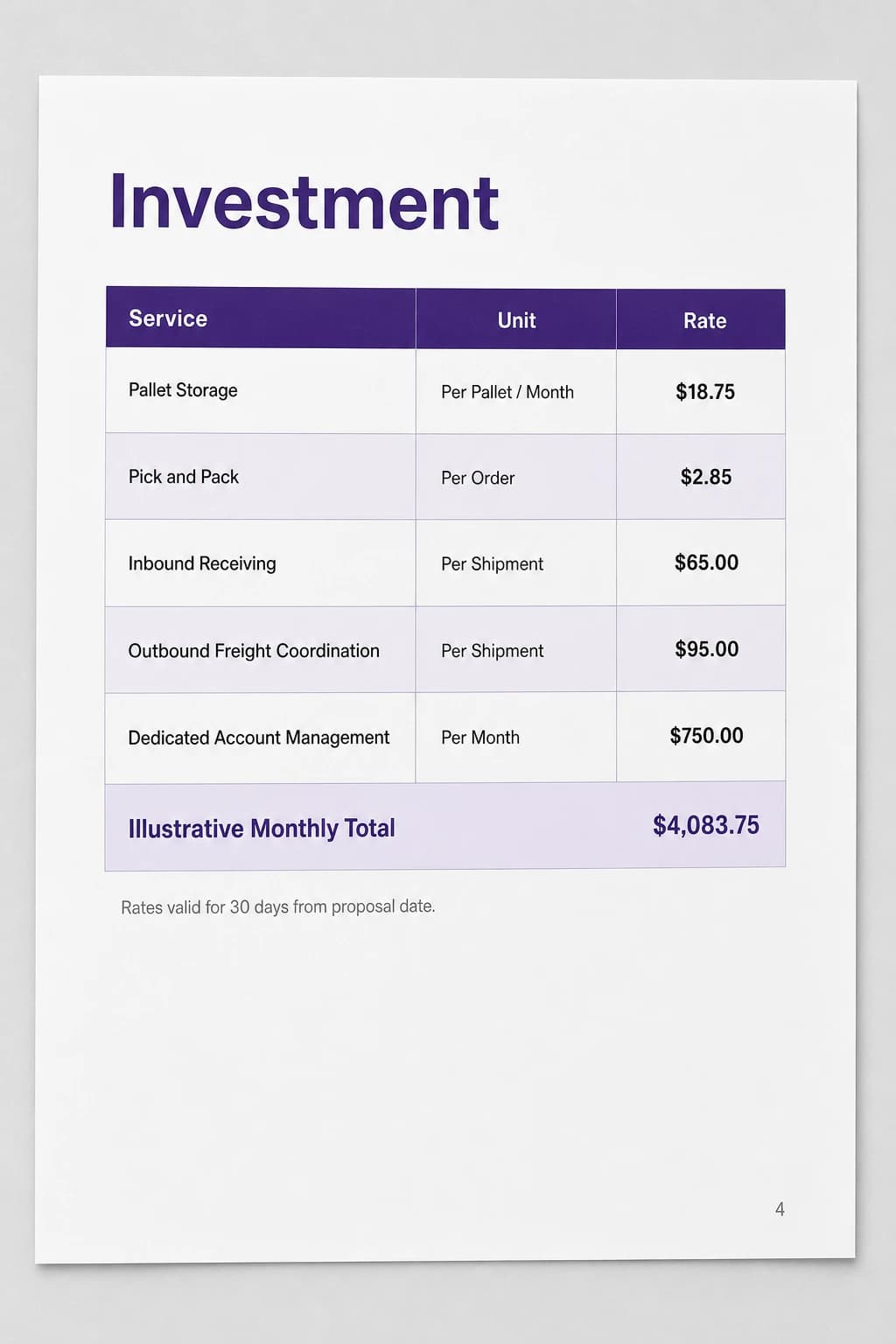
The document that turns a conversation into a decision. Eight sections, in this order: what you understood about their situation, what is in scope, what is not in scope, how the work runs and who does it, the timeline plus what you need from them, the price and what triggers a change to it, one relevant piece of proof, and one clear next step with a validity date.

Who reads it
The person who signs, and usually two or three people who read it before they do, at least one of whom only reads the price.
When they ask
After the walk, the discovery call or the RFP. By this point marketing has finished its job and the document carries the deal on its own.

What gets it binned. Burying the price and skipping the exclusions. Buyers read the price first, often out of order, then the scope and the exclusions, then the timeline, then who is doing the work. The work you did not price is the work that eats the margin, and writing down what is not included is the clearest signal in the document that you have done this before.

Case study

Also called: Project profile, success story, past performance entry

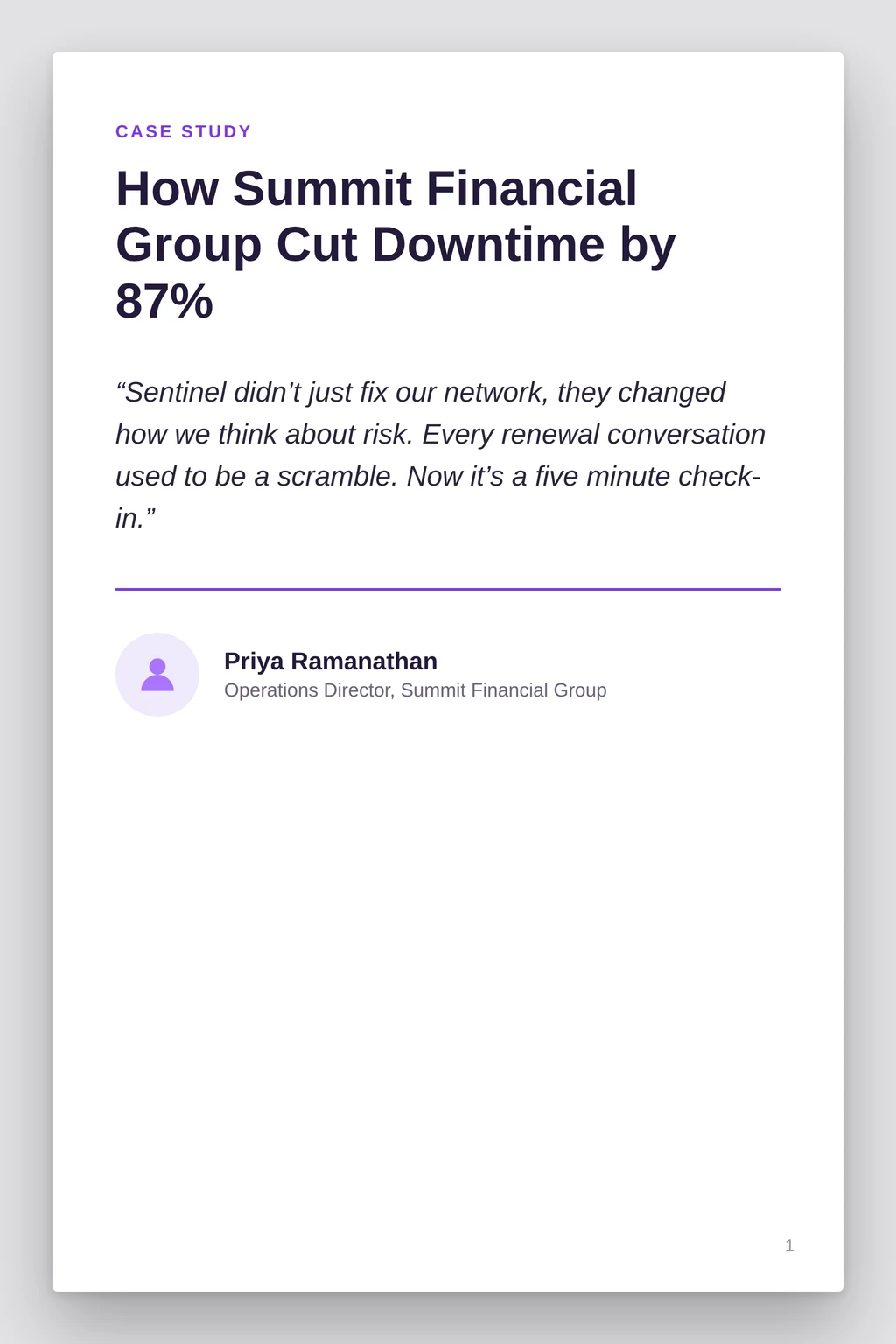
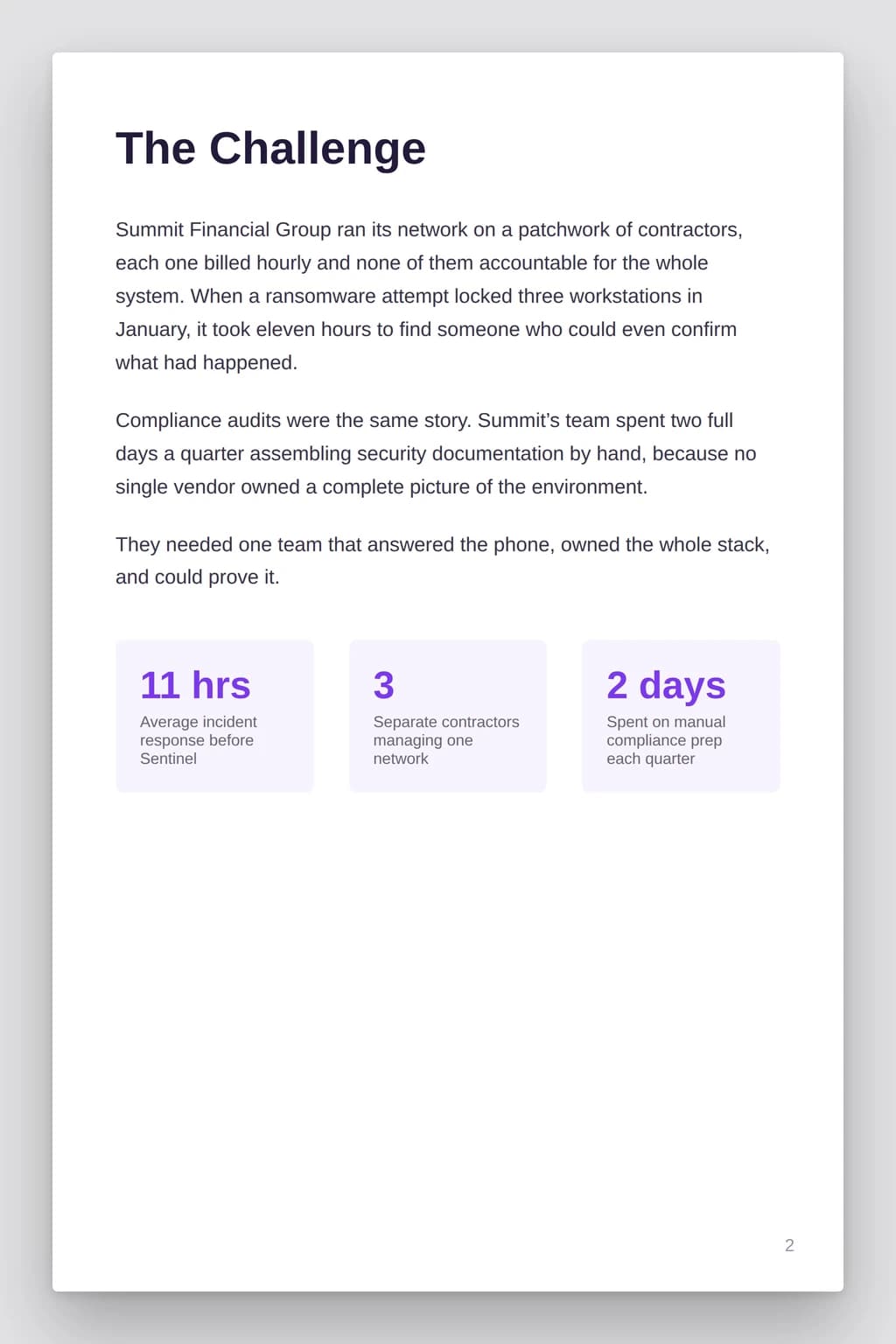
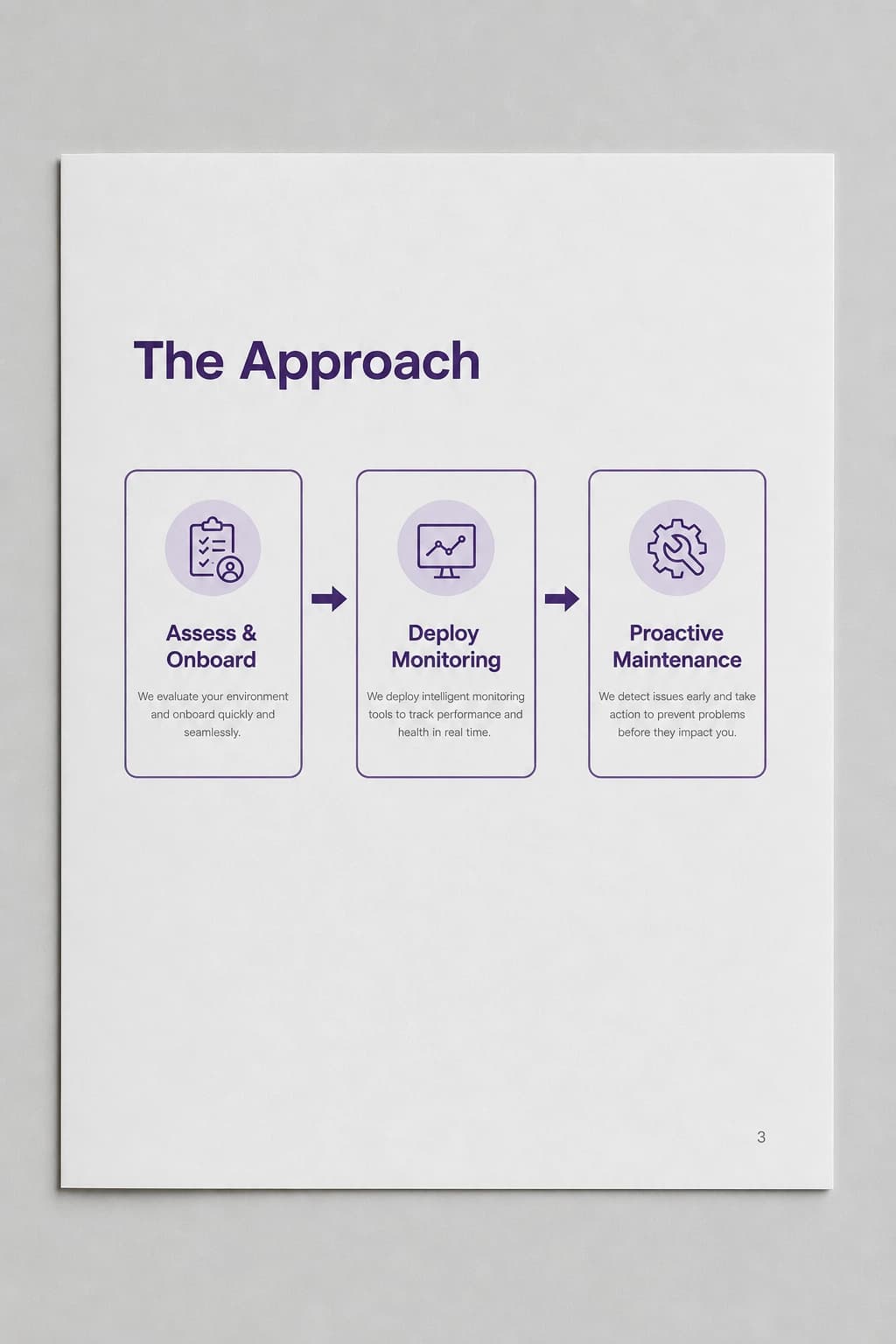
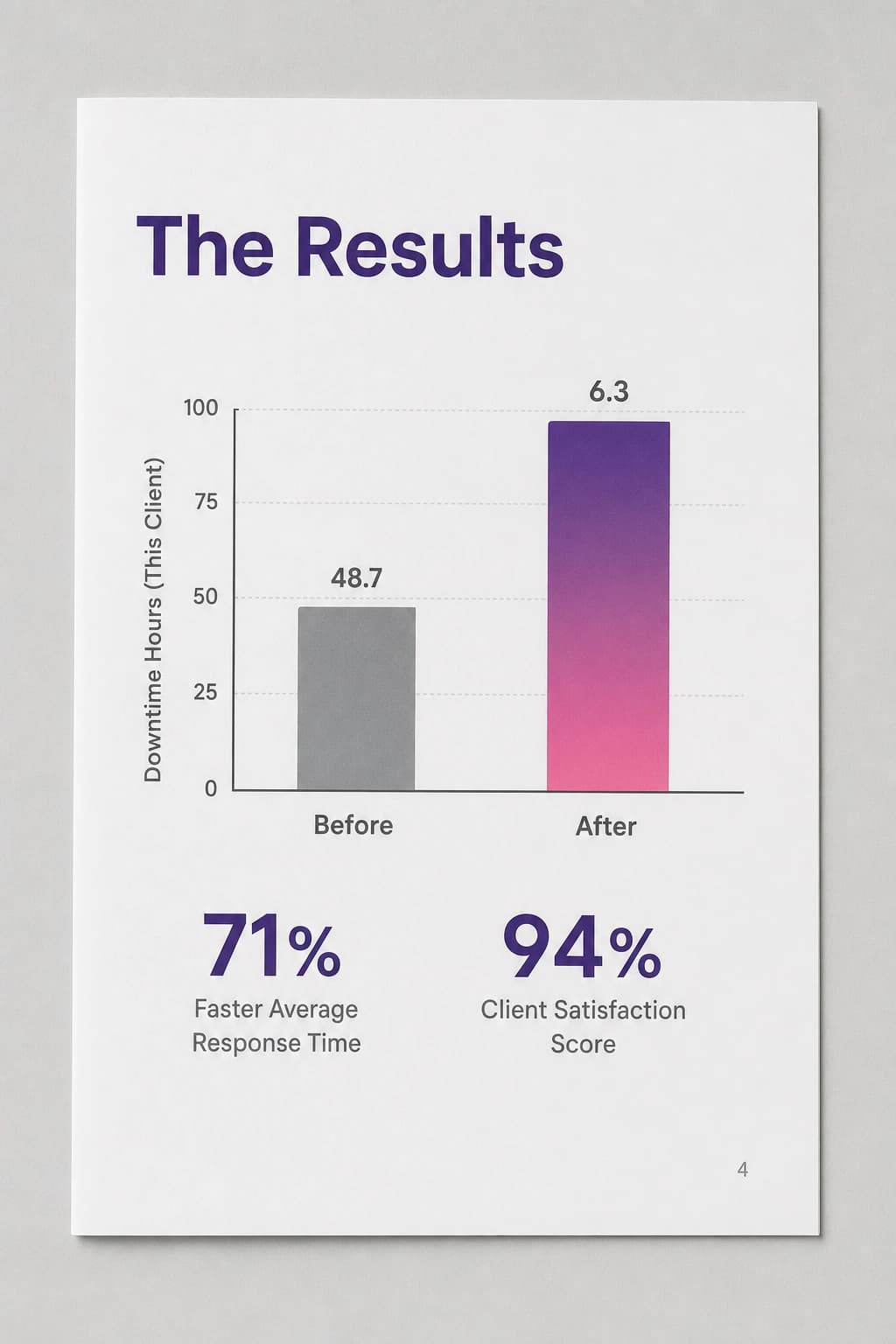
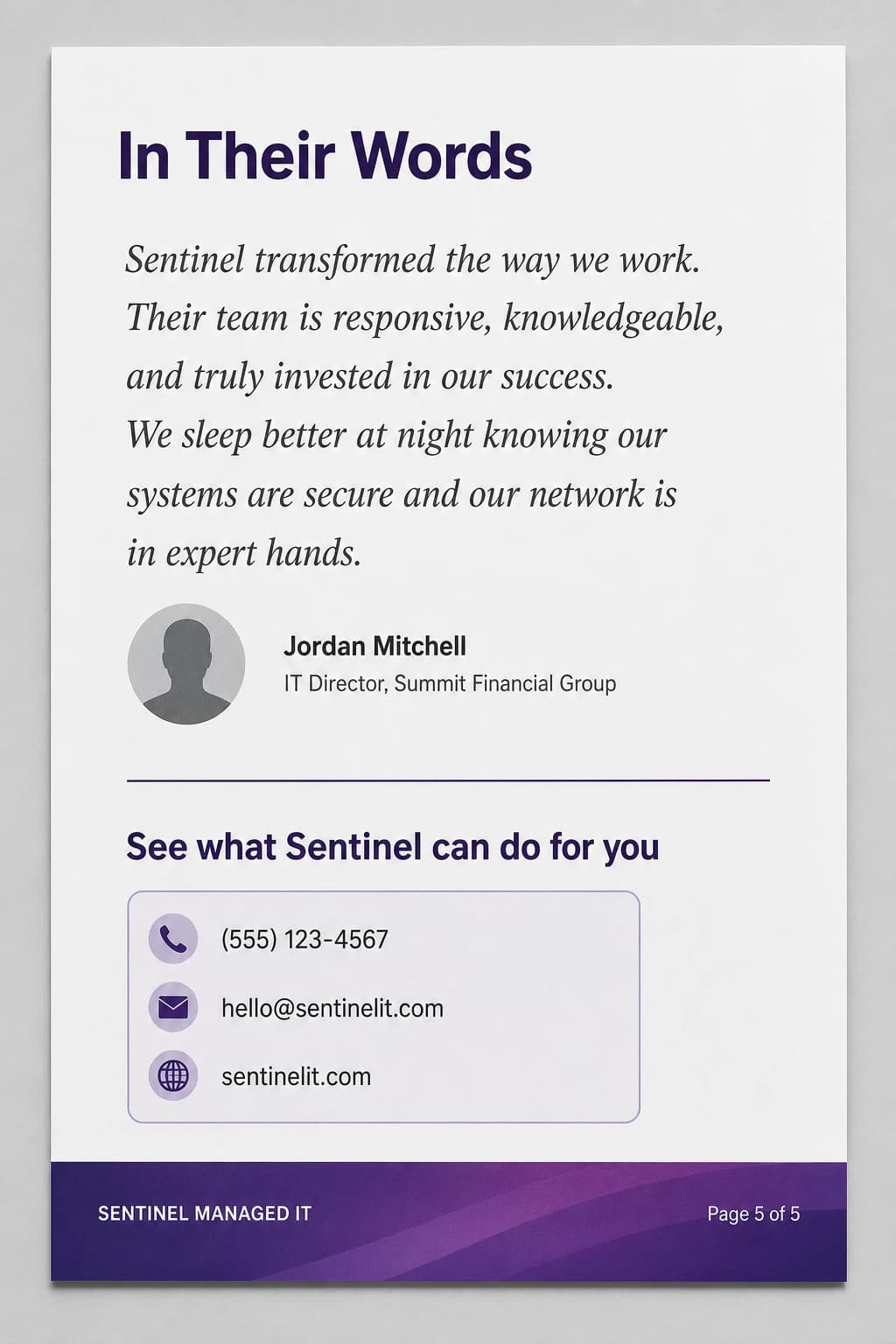
One piece of work, written so somebody who was not there can judge it: the situation, what you actually did, the numbers, and a sentence from the client. It is the only proof in the stack that a competitor cannot copy, because it happened to you.

Who reads it
The buyer deciding whether you have done this before, and the procurement reader filling in the past performance block of a screening form.
When they ask
Inside a proposal as the one relevant piece of proof, and on its own as something you publish. It is also the raw material for the past performance entries on a capability statement.

What gets it binned. Waiting for permission to use the client name and publishing nothing in the meantime. In most agreements the name is the only restricted part: the situation, the work, the constraint and the outcome are yours to describe.

What Blendin does not do with these

Blendin does not write your capability statement, your proposal, your bid or your spec sheet. It is not a document generator and it is not a design tool for laying out a page by hand. It produces and publishes a company's recurring content in that company's real brand: posts, carousels and native LinkedIn documents. The templates linked above are guides you copy and fill in yourself, free, with nothing to sign up for.

There is one genuine overlap, and it is the case study. Give Blendin a project and it will turn it into a LinkedIn document post in your real colours and fonts, which is the same proof in the format the buyer is already scrolling.

See the case study document

Which of these you need depends on your trade

A distributor lives and dies by the line card. A manufacturer is judged on whether its spec sheets are current. A managed IT provider is asked for packaging and a capability statement. A cleaning contractor is judged on the bid. The industry guides cover who is asking and why.

See the industry guides

The documents are the easy half

A buyer reads your capability statement once. They check your feed before they read it and again before they sign. Blendin writes and designs that feed in your company's real palette, fonts and voice, and publishes it for you, with a person approving every piece.

14 days free with full Starter access, card required, cancel anytime.

Frequently asked questions

The definitional questions, answered so each one stands on its own.

What is a sell sheet?

A sell sheet is a one page document that argues for one product: why a distributor, retail buyer or rep should stock it or lead with it, what the margin or the outcome is, and the proof. It is not a spec sheet. A spec sheet states measured facts for somebody checking fit, and a sell sheet makes a claim for somebody deciding what to carry. They carry different content and usually different sign off, because a wrong value on a spec sheet is a returned order while a sell sheet is a sales argument. Most products need both, and the sell sheet should link to the spec sheet rather than try to contain it.

How do you make a spec sheet?

Put the product name and part number at the top, then the measured facts in a table: dimensions, materials, performance figures buyers compare on, operating limits, and the standards or certifications it meets. Add ordering information with the exact part numbers, one photograph or line drawing, and a revision number with an issue date. Keep it to one page, keep persuasion off it entirely, and make sure the file a buyer downloads today is the current revision. The revision number and date are the field most often missing and the one that decides whether an old copy in somebody's downloads folder is still true.

What is a line card?

A line card is a one page document in which a distributor lists the manufacturers it represents, so a customer can see which brands it can supply. It answers one question, can you get me this brand, and it is the single most requested document a distributor owns. It is often confused with two others: a line sheet is a brand showing a buyer what it sells and at what price, and a spec sheet is the measured facts about one product. Different author, different reader, different job. The common failure is not the layout, it is that the line card on the website is several years and several supplier changes out of date.

What is a capability statement and who asks for one?

A capability statement is a one page document telling a government or enterprise buyer what your company does, what it has already delivered, why you rather than the next qualified bidder, and the identifiers they need to look you up. It is the standard introduction in United States government contracting, and primes screening subcontractors and large private buyers running vendor onboarding use it the same way. Six blocks fit on a page: a company overview of three to four lines, five to eight core competencies written as services, three to five past performance entries carrying a period, a value and a contact, three to five real differentiators, the company data block with your codes and certifications, and one named person with a direct line.

What should a service proposal include?

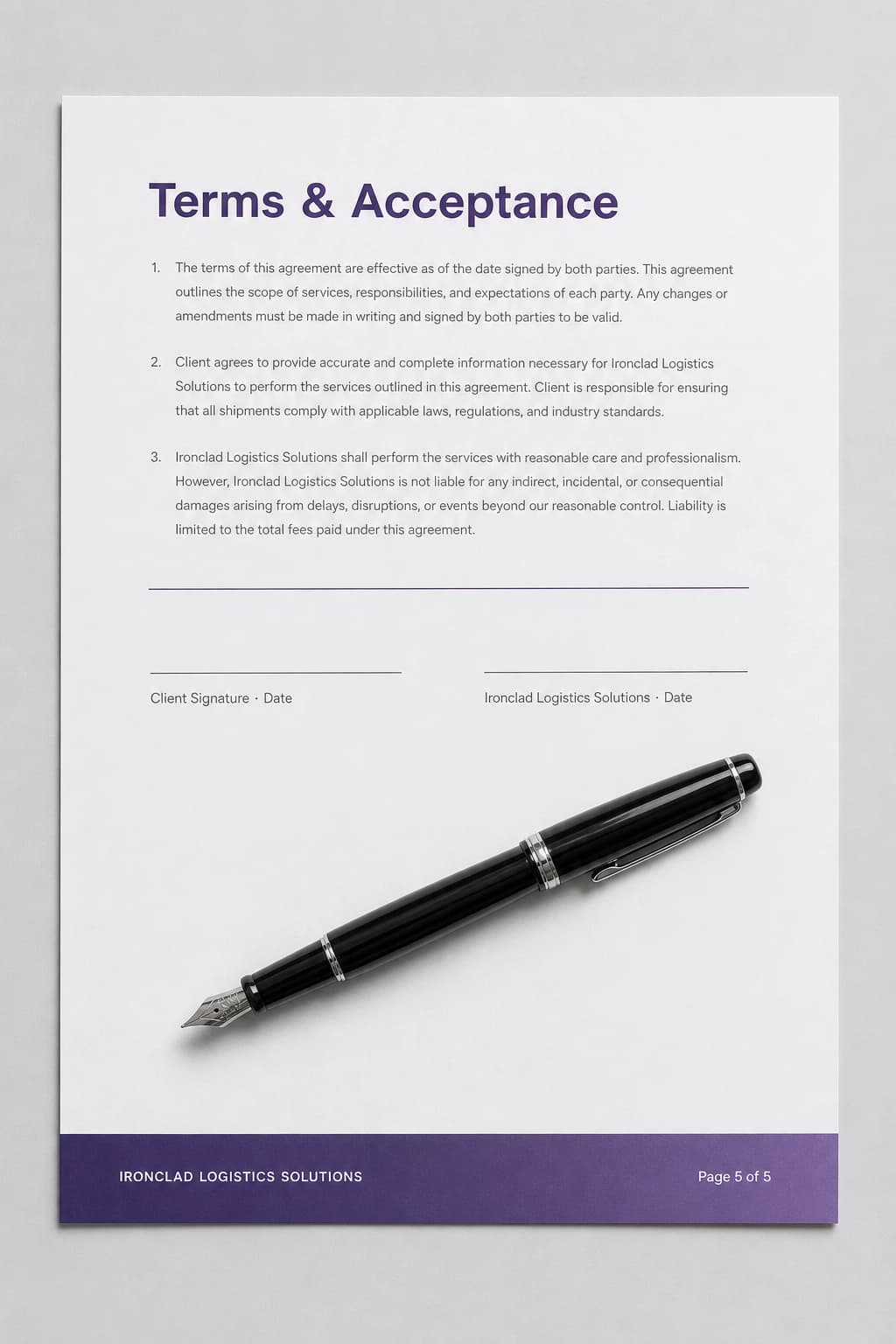
Eight sections, in this order: what you understood about their situation, what is in scope, what is not in scope, how the work runs and who does it, the timeline plus what you need from them, the price and what triggers a change to it, one relevant piece of proof, and one clear next step with a validity date. The order matters as much as the contents, because nothing about your company should appear above the section proving you understood theirs. Keep it short enough that the price is reachable in under a minute, and move the terms behind the signature rather than between the price and the decision.

Does Blendin write these documents for me?

No, and it is worth being exact about it. Blendin does not write a capability statement, a proposal, a bid or a spec sheet. It produces and publishes a company's recurring content in that company's real brand: posts, carousels and LinkedIn documents. The one overlap is the case study, which Blendin will turn into a native LinkedIn document post in your colours and fonts. The templates on the pages linked from here are guides you copy and fill in yourself, free, with no signup.