
Marketing guides by industry

Four guides for B2B services companies that have to look established before anyone will sign. Each one answers the same three questions for its own trade: who actually buys, what they ask you to send, and what they check before they commit.

What marketing actually changes in a B2B services sale

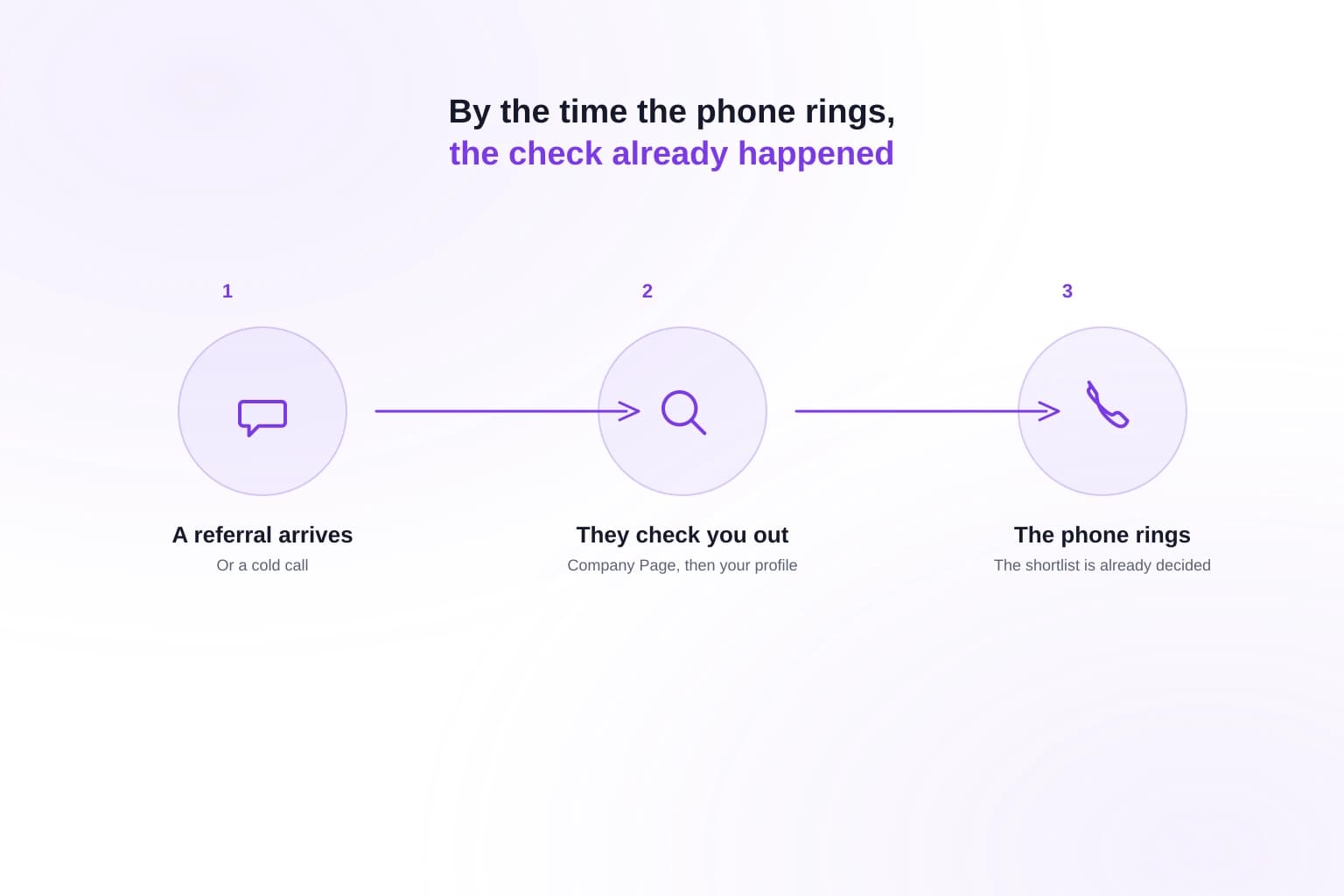
It changes one stage, and it is worth being honest about the others. It does not get a product specified, that is product data. It does not get you onto an approved vendor list, that is certification and paperwork. It does not replace the rep, the referral or the site walk. What it decides is what a buyer finds when they check you out, which happens after your name has already reached them from somewhere else, and which happens on every deal.

Most firms in these industries lose that stage by default rather than to a competitor. About 2% of LinkedIn users publish weekly (derived from LinkedIn 2019), so in a narrow niche your buyer is a reader and almost nobody is writing. The second thing every vertical below has in common: the shortlist is decided before the bid document exists. Once there is an RFP on the table, marketing is finished and the proposal takes over.

+1,182
impressions per post
at 2 to 5 times a week, Buffer 2025
3x
more engagements
for the most consistent posters, Buffer 2025
~2%
of LinkedIn users publish weekly
derived from LinkedIn 2019
7x
faster follower growth
for pages posting weekly, LinkedIn Marketing Solutions
The guides

Four trades, four different buying moments

Each block below is the short answer. The guide behind it is the long one, written for somebody who has to do this with no marketing staff and an operational week.

Managed IT and MSPs

Managed services, IT support, co-managed IT

Who buys
Owners, finance leads and operations managers. Rarely the IT person, because in a company small enough to outsource IT there usually is not one.
What they ask you to send
A one page overview of what is in each package and what drives the price, plus references in their own industry. Larger buyers and primes ask for a capability statement by name.
What they check first
The Company Page first, for recent activity and real headcount, because that is the credential check. Then the owner's own profile, because a referral looks up the person and not the firm.

The trap. Every provider in your market writes proactive, responsive, around the clock, a partner rather than a vendor. Apply one test: if a competitor would happily publish your exact sentence about themselves, cut it.
Manufacturing and distribution

Industrial marketing, suppliers, fabricators, wholesale distribution

Who buys
Engineers, plant managers and purchasing. If you sell through reps and distributors, they are the first buyer: they decide which of several competing lines to lead with, and they lead with whatever is easiest to sell.
What they ask you to send
Spec sheets, cross references and application notes if you make the product. A current line card if you distribute it, which is the single most requested document a distributor owns and usually the most out of date.
What they check first
Whether the data is current, whether the lead time is stated, and whether anything has been published since the last catalogue. Marketing does not get you specified and it does not get you onto an approved vendor list. It decides what a buyer finds when they check you before asking for a price.

The trap. Confidentiality is less of a blocker than it looks. The customer name is the restricted part. The process, the fixture, the tolerance, the inspection step and the failure you corrected are all yours to show.

Logistics, 3PL and freight

Third party logistics, freight brokerage, carriers, warehousing

Who buys
Shippers, and the consultants who build the shortlist before a shipper ever sees it. Note the ambiguity in the phrase: marketing logistics, the supply chain term for physically distributing goods, is a different subject entirely.
What they ask you to send
The lanes you want and the ones you do not, capacity this month, what your detention policy pays and how fast. Then a proposal once the RFP exists.
What they check first
Whether they have heard of you in their vertical already. Being on the shortlist is a separate contest from winning the bid, and it is decided before the bid document is written. Once that document exists, marketing is finished and the proposal takes over.

The trap. A photograph of a truck is not a post. Swap your company name for a competitor's: if the sentence is still true, it was never about you.

Commercial cleaning and facility services

Janitorial, building services, day porter, facility maintenance

Who buys
Facility managers, property managers and office managers. The person who signs is usually the person who gets the complaint, which is why reliability outranks price more often than bidders expect.
What they ask you to send
A bid that answers the specification the buyer actually cares about rather than the one in the document, with key control and escalation written down.
What they check first
What is not getting done right now, when the current agreement ends and what notice it needs, and who holds keys and what happens when someone leaves. Most bids never mention key control, and a buyer who has had a key problem remembers the one that did.

The trap. Most agreements carry thirty days notice, so a bid submitted at the wrong point in the month costs you a month whatever it says.

Staffing and recruiting: no guide yet

Staffing is the fifth trade on this list and it does not have a guide here. Rather than send you to a page that does not answer it, the short version: a staffing firm is selling twice, to the company that hires and to the person who takes the job, and the two audiences read different things. LinkedIn carries both sides of that, which is unusual. 77% of recent job-changers used LinkedIn, per LinkedIn Talent, and LinkedIn Talent also reports 7 hires per minute, 3 million a year, through the platform. The publishing job is the same as everywhere else on this page: specific roles you genuinely fill, in one named sector, held to a cadence you can survive.

Until it is written, the closest guide in shape is the managed IT one, because both sell a service where the buyer is checking whether you are still going to be here next year.

Read the MSP marketing guide

Every trade above asks for a document

A capability statement, a spec sheet, a line card, a proposal, a case study. They are the same five documents under different names, and the one thing they all have in common is that the version you send is usually older than the version you think you have. Each one is defined, with a template, in the documents hub.

See the document templates

Where Blendin fits in any of these

Blendin is the marketing department a B2B services company does not have. You give it your company URL, it reads the real palette, fonts and logo off those pages, and then it writes and designs each piece in that brand rather than in a template's defaults. It publishes to LinkedIn, personal profiles and Company Pages, plus Instagram, Facebook and Threads, with TikTok on Pro. A person approves every piece before it goes out.

The part these trades usually need most is the one nobody sells: getting the facts out of the owner's head. The incident, the policy, the reason you turned work down. Blendin starts with a short guided interview, typed or spoken, and writes from your real answers rather than from a topic, then checks the draft against the tells that give generated writing away and rewrites until it reads human.

14 days free with full Starter access, card required, cancel anytime.

Frequently asked questions

The questions owners ask before they read any of the guides.

What is B2B services marketing?

B2B services marketing is what a company selling a service to other businesses does to be found, remembered and believed before a buying conversation starts. In practice, for a managed IT provider, a distributor, a 3PL or a cleaning contractor, it changes exactly one stage of the sale: what a buyer finds when they check you out after your name has reached them from a referral, a consultant, a cold call or a conference. It does not get a product specified, it does not get you onto an approved vendor list, and it does not replace the rep or the site walk. Those are different jobs done by product data, by paperwork and by people.

Does LinkedIn work for industrial, logistics and trades buyers, or is it only for office jobs?

It works, but as a checking surface rather than a discovery one. Engineers, plant managers, dispatchers and facility managers are on LinkedIn and mostly do not post, which is the point rather than the objection: about 2% of LinkedIn users publish weekly, derived from LinkedIn 2019, so your buyer is a reader. In a narrow industrial or freight niche the number of firms publishing anything at all is small enough that consistency by itself changes what a buyer finds.

How often should a B2B services company publish on LinkedIn?

Once a week, held for a year, beats four a week for six weeks and then silence. An abandoned page is dated and tells a visitor exactly when you stopped. Buffer's 2025 analysis associates posting 2 to 5 times a week with about 1,182 more impressions per post, and finds 3x more engagements for the most consistent posters. Both figures describe consistency rather than volume. If 2 to 5 is not survivable in your week, one held is the right answer.

Should we post from the Company Page or from the owner's profile?

Both, doing different jobs. The Company Page is the credential check: it needs recent activity, real headcount and a clear description, and pages posting weekly grow followers 7x faster, per LinkedIn Marketing Solutions. The owner's profile is where trust lands, because a referral looks up the person, and 73% of decision-makers trust thought leadership over marketing materials, per Edelman-LinkedIn 2024. A working split: anything a competitor could also sign goes on the page, anything that only works because you personally said it goes on your profile.

We are competing against a private equity backed regional company. What do we do?

Do not try to look like them, because you cannot out-brochure a company that has a marketing department. Compete on what their scale costs them. Rolled up firms get bigger and less personal, accounts move to a queue, and the person who used to answer the phone is several layers away. Each of those is a real reason to buy from you and none of it is visible to a prospect unless you publish it in your own name. Aim to look established and specific rather than large.

Which of these industry guides should I read first?

Read the one that names your business. They are not variations on one article: the buyer, the document they ask for and the moment marketing matters are genuinely different in each. Managed IT turns on packaging and the owner's own credibility, manufacturing and distribution on current product data and a live line card, logistics on being remembered before the RFP is written, and commercial cleaning on the walk and the bid. If two apply to you, read both; the overlap is small.