LinkedIn Algorithm 2026: Why Your Reach Is Falling
LinkedIn reach is down across the board in 2026. What 360Brew, dwell time, and the AI-slop crackdown changed, and the four levers that still fix it and grow reach.
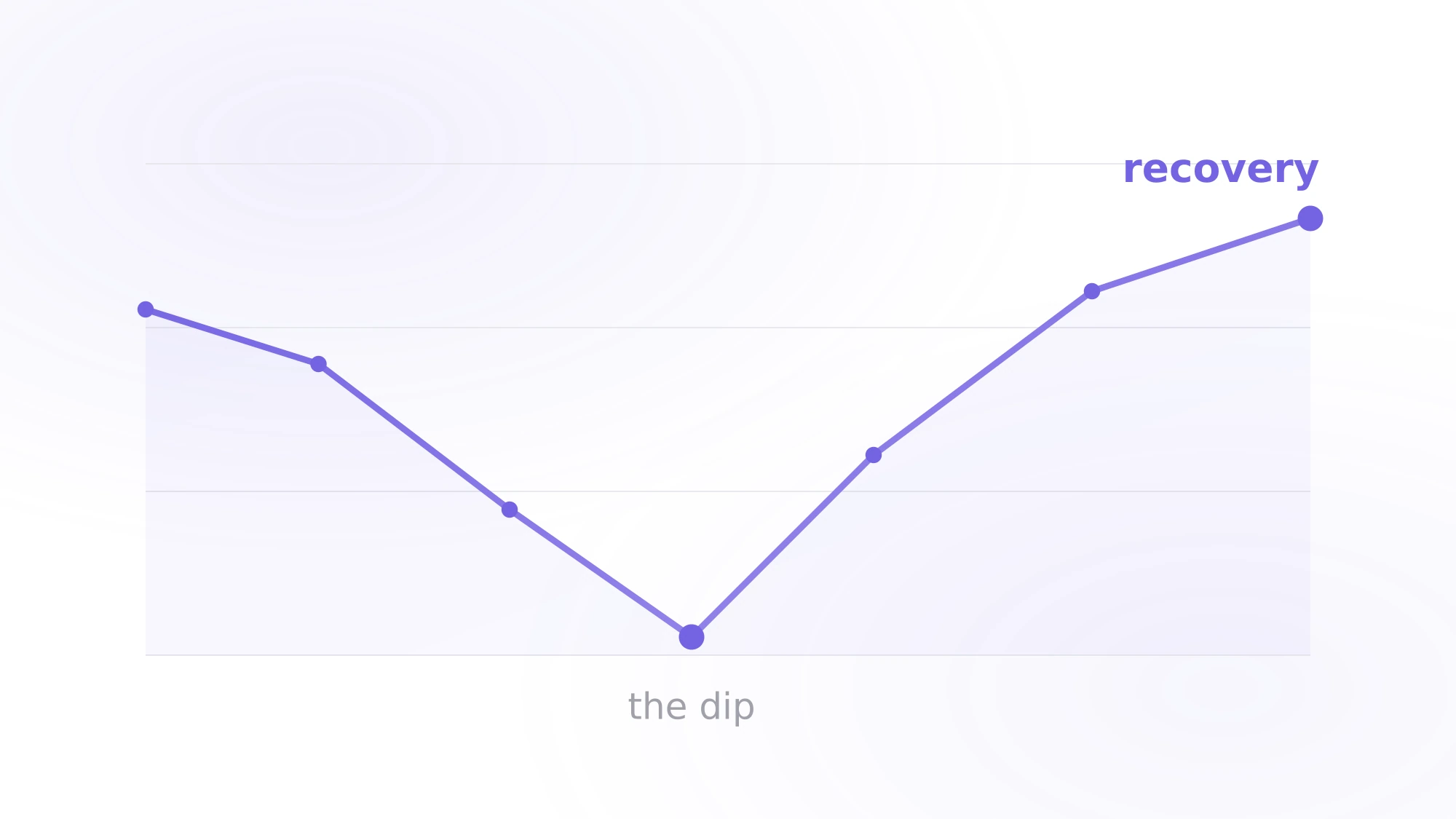
Your posting has not gotten worse. Your numbers have. The same kind of post that pulled a few thousand views last year now stalls in the hundreds, the dashboard still says you published on schedule, and the quiet conclusion creeping in is that you did something wrong. You probably did not. LinkedIn rebuilt the machine that decides who sees what, and the new machine rations reach on rules most people on the platform have not read yet.
Here is the short answer, for anyone who only has thirty seconds. Reach is down because LinkedIn moved to a single large AI model that ranks the feed on relevance instead of raw popularity, and because the platform started actively limiting the reach of generic, low-effort content. You cannot reverse that. You can line up with it. This piece is the long version: what changed, why, and the four levers that still move reach in 2026.
Yes, your reach really is down
Start by naming the thing, because gaslighting yourself is a waste of a good Tuesday. The decline is real and it is broad. By one of the most widely cited measures, Richard van der Blom's annual Algorithm Insights report, average post views fell sharply year over year, with engagement and follower growth down alongside them. Almost every creator who is not in denial has watched the same curve bend on their own profile.
Now the part that reframes the whole problem. For most people, this was deliberate, not a punishment. The newer reporting on the same datasets shows that while raw views fell, engagement per post that does get distributed actually held up or rose, because the platform is now showing each post to a smaller, more relevant slice of the feed. LinkedIn would rather put your post in front of five hundred people who care about the topic than five thousand who scroll past. The reach you lost was mostly the reach that was never going to do anything for you.
That distinction matters because it tells you what to optimize. Chasing the old vanity reach is chasing a number the platform deliberately retired. The game now is relevance and retention: being unmistakably worth the slot you get. To understand how to do that, you have to understand the model making the call.
Meet 360Brew, the model behind the feed
For years the LinkedIn feed ran on a stack of separate, narrow ranking systems stitched together, each scoring a different signal. In early 2025 LinkedIn's research team published a paper describing 360Brew, a single large language model built to replace that patchwork with one unified ranker across the platform's surfaces. It is a foundation model, the same broad family of technology as the chat assistants you already use, pointed at the job of deciding what belongs in your feed.
The practical shift is the important bit. A model like this does not just count clicks and hashtags. It reads natural language, your profile, your post, the post's topic, the reader's history, and infers whether the two actually match. If a profile reads as a supply-chain consultant and the post is a generic motivational quote, the model sees the mismatch and holds the post back. If a RevOps leader posts a specific, useful take on pipeline forecasting, the model recognizes the alignment and pushes it to the RevOps people most likely to care. The feed went from popularity contest to relevance match.
Two things follow directly, and they will come up again and again below. First, coherence pays: a profile and a posting history that clearly stand for something give the model an easy, confident match to make. Second, specificity pays: a post about one real thing is legible to the model in a way that a post about everything and nothing is not. Pick a lane and write inside it.
Dwell time is the metric that matters now
If relevance decides whether your post enters a feed, dwell time decides whether it keeps going. Dwell time is simply how long someone's attention rests on your post: do they stop, expand the see more, read, swipe through the slides, or do they flick past in under three seconds. It has quietly become the cleanest quality signal the platform has, because it is hard to fake and it correlates with the thing LinkedIn actually wants, which is people finding the feed worth their time.
The gap is not subtle. By van der Blom's measurements, posts that hold attention for around a minute see far more engagement than posts skimmed in a few seconds. The first line and the format are doing most of that work. A flat opener and a wall of text get the three-second flick. A sharp first line, a specific claim, and a format that invites a swipe buy the seconds that tell the algorithm to keep distributing.
This is also exactly where generic AI writing goes to die, which is why it is worth reading our companion piece on the tells that make writing sound like AI. A post that reads like a model wrote it gives a reader nothing to stop on, so dwell time collapses, so distribution stops. Nobody flags a file anywhere. The post just quietly fails to earn the one signal the feed runs on.
The golden hour, and why comments win
Timing still matters, just not in the way the best-time-to-post charts promised. What the evidence supports is a window, often called the golden hour, of roughly the first thirty to sixty minutes after you publish. Strong early engagement in that window signals the algorithm to widen distribution; a flat start tells it to stop. This is why the same post can travel one day and sink the next depending on nothing more than whether anyone engaged early.
Inside that window, not all engagement is equal. Comments carry far more weight than likes, and substantive comments, the kind with a real sentence in them, carry more than a one-word “great post.” The reason ties back to dwell time and relevance: a thoughtful comment is proof a real person stopped and thought. So after you publish, the best move is not another post. Spend that first hour in the comments, on your own post and on other people's, having real conversations.
One honest, practical note on this, because it is where a lot of tools overpromise. LinkedIn down-ranks links in the body of a post, so the common move is to put your link in the first comment. Blendin drafts that first comment for you and, on comment-capable networks, auto-posts it the moment your post goes live, so the CTA lands inside the golden hour without you watching the clock. You still approve the post itself, because a human in the loop is the entire point of staying on the right side of the platform.
The AI-slop crackdown
In 2026 LinkedIn went from implicit to explicit. The platform announced measures to limit the reach of low-quality, AI-generated content, the stuff the industry now calls AI slop: posts that are fluent, generic, and empty of any original perspective. Coverage of the change framed it plainly, LinkedIn wants less of the machine-written filler clogging the feed, and it is willing to suppress reach to get there.
Here is the nuance that most hot takes miss. The algorithm is not a reliable AI detector, and LinkedIn has not claimed it is one. It does not need to be. It reads behavior. Generic AI content earns near-zero dwell time, no saves, and no real comments, and the model reads that behavioral fingerprint and quietly stops distributing the post. Whether a human or a machine typed it is almost beside the point. The post failed because no one cared, and AI slop is engineered, by accident, to be the thing no one cares about.
So the takeaway is not “hide that you used AI.” It is “do not publish anything, by any method, that reads like the average.” If you want a fast gut check before you post, run the draft through our free AI Writing Checker, which flags the same tells the feed's readers spot in three seconds.
The four levers that still grow reach
Strip away the model names and the panic, and what actually moves reach in 2026 is short, boring, and durable. Four levers, in rough order of how much they matter.
1. Consistency. The single most reliable signal is that you show up. Accounts that publish two to five times a week earn +1,182 impressions per post over accounts that publish once a week or less (Buffer 2025), and the model treats a reliable cadence as evidence you are a creator worth distributing. We made the full case, with the math, in the essay on why only 2% of LinkedIn publishes weekly. Consistency is the lever that makes the other three compound.
2. Sound like a person. Dwell time is the new currency, and nothing kills dwell faster than prose that reads generated. In 2026, sounding human is a reach lever, not just a style preference.
3. Pick a lane. 360Brew rewards a clear topic-to-profile match. A feed of posts that all orbit one or two themes is far easier for the model to place than a scattershot of unrelated takes. Narrow beats broad.
4. Use formats that earn dwell. Some formats are simply better at buying the seconds that drive distribution. That is the next section.
The formats that earn dwell time
If dwell time is the metric, the formats that win are the ones that ask for more than a glance. Carousels and native LinkedIn Documents are the clearest example: every swipe is another second of attention, and the platform reads that as quality. By van der Blom's data, document posts have been among the highest-engagement formats on LinkedIn, outperforming plain text by a wide margin, precisely because a reader who swipes through eight pages has spent real time with your idea.
The catch is the one that keeps most people on text-only posting: building a carousel or a multi-page Document by hand is slow. A good one is hours of layout, type, and color work per post, which is not a budget anyone sustains at a two-to-five-times-a-week cadence. That is the bottleneck worth removing, because it is the difference between knowing carousels work and actually publishing them every week.
What to do in the next 30 days
You cannot reverse-engineer 360Brew, and you should not try. You can line up with how it works. A month-long plan that does exactly that:
- Pick one lane. Choose the single topic you want the model to associate with your profile, and make sure your headline and About section say it plainly. Coherence is a ranking input now.
- Commit to a scheduled cadence. Two to three posts a week, produced in one sitting and scheduled, not improvised each morning. Reliability beats volume.
- Lead with a specific first line. The opener buys the dwell time that buys the distribution. Name the number, the client, the thing that went wrong. Skip the “I am thrilled to announce.”
- Protect the golden hour. Publish when you can be present for the next hour, then go reply to comments like a person, not a brand.
- Run every draft through a tells check. Generic prose is now a reach tax. The free AI Writing Checker takes ten seconds.
- Favor carousels and Documents. Make at least one swipe-based post a week. It is your best dwell-time bet.
- Read the results, then double down. Blendin's multi-layer Insights bring post performance, audience growth and demographics, and best-time-to-post into one place, so you repeat what worked instead of guessing.
None of it is a hack. The new algorithm just rewards unglamorous, compounding behavior, run on a schedule you can actually keep. For the deeper version of the cadence half of this plan, the 2% essay has the full 30-day build.
The bottom line
The 2026 reach drop is real, but it is not a glitch and it is not aimed at you personally. LinkedIn replaced a popularity engine with a relevance engine, 360Brew, and started actively starving the generic content that was clogging the feed. The platform stopped paying for volume and started paying for attention. Reach did not disappear. It got rationed, and the currency is whether a real person stops and reads.
You cannot game that. You can earn it, with four unglamorous moves: show up on a schedule, sound like a human, pick a lane, and use the formats that hold attention. Do those four for ninety days and the curve that bent against you starts bending back. That is the whole strategy, and it happens to be exactly what Blendin was built to make easy.
Frequently asked questions
Why is my LinkedIn reach down in 2026?
Because LinkedIn replaced its stack of separate ranking systems with 360Brew, a single large language model that ranks the feed on relevance instead of raw popularity, while also actively limiting the reach of generic, low-effort content. By one widely cited industry analysis, average post views fell sharply year over year. Most of the reach that disappeared was reach that was never going to engage anyway; posts that genuinely match a reader's interest still travel.
What is 360Brew?
360Brew is the large language model LinkedIn's research team described in a 2025 paper as the foundation model now powering feed ranking. It replaced a patchwork of separate, narrow ranking systems with one model that reads a post's language, your profile, and a reader's history to judge whether the two actually match, then ranks the feed on that relevance.
Does LinkedIn penalize AI-generated content?
Not by detecting AI directly. LinkedIn has said it wants to limit the reach of low-quality, AI-generated content, but the mechanism is behavioral rather than a detector built to spot machine writing: generic, AI-flavored posts earn near-zero dwell time, no saves, and few real comments, and the model reads that pattern and quietly stops distributing the post. Writing that reads specific and human, whether or not AI helped draft it, does not trigger the same suppression.
How often should I post on LinkedIn to fix my reach?
Two to five times a week is the cadence with the strongest evidence behind it. Accounts posting that often earn +1,182 impressions per post over accounts posting once a week or less, per Buffer's 2025 analysis, and a reliable rhythm is itself a signal the model reads as evidence you are a creator worth distributing to.
What is the golden hour on LinkedIn?
The golden hour is the window, roughly the first thirty to sixty minutes after you publish, when early engagement signals the algorithm to widen or narrow a post's distribution. Comments carry far more weight than likes in that window, and a substantive comment carries more than a one-word reaction, so the highest-leverage move right after publishing is replying to comments rather than starting a new post.
Sources and further reading
Third-party figures in this piece are attributed inline and linked below. Verify the latest against the original sources before citing them elsewhere; the platform and the research both move fast.
- LinkedIn Engineering, “360Brew: A Decoder-only Foundation Model for Personalized Ranking and Recommendation” (arXiv, 2025): arxiv.org/abs/2501.16450.
- Richard van der Blom, LinkedIn Algorithm Insights report (annual, analyzing millions of posts): linkedin.com/in/richardvanderblom.
- Social Media Today, “LinkedIn wants to limit the reach of AI-generated content”: socialmediatoday.com.
- Buffer, analysis of LinkedIn posting frequency and impressions (2025): buffer.com/resources.
Want the rest of the cluster? Read why only 2% of LinkedIn publishes weekly for the cadence case, and the AI writing tells that quietly cost you reach for the dwell-time half. Reach is not the only distribution that matters now: see why LinkedIn is one of the most-cited sources in AI search, and what actually earns the LinkedIn Top Voice badge in 2026. If you are weighing tools, see how Blendin stacks up against ContentStudio on multi-network publishing and multi-layer Insights. Or compare Blendin plans and the monthly credits each one includes and start publishing on a schedule today.